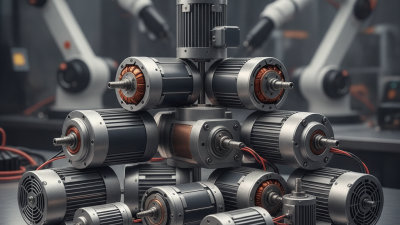
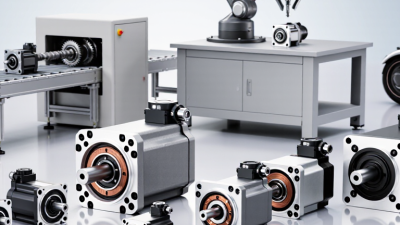
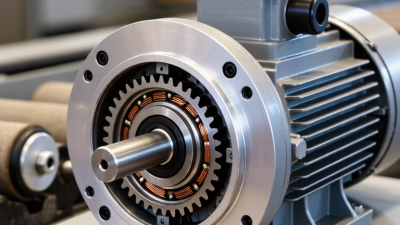
Choosing a DC motor is not merely a matter of matching voltage and horsepower. The application decides much more. A conveyor may need steady torque, while a small robot may demand quick speed changes. A battery-powered tool may prioritize efficiency, compact size, and controlled heat. These practical differences explain why the Various Types Of Dc Motors remain important in modern engineering.
Electrical-machines author Stephen J. Chapman emphasizes this point: “DC motors are valued for their excellent speed control characteristics.” His observation reflects real workshop experience. A brushed series motor can deliver strong starting torque, almost like a sudden mechanical shove. A shunt motor offers steadier speed under changing loads. Compound motors balance useful torque with improved regulation. Permanent-magnet DC motors often simplify compact equipment. Brushless DC motors remove mechanical brushes and can reduce maintenance.
The categories overlap in real products. That can confuse beginners. A motor may be classified by its excitation method, construction, control system, or intended application. One label rarely explains everything. Engineers must inspect the load profile, starting current, duty cycle, cooling path, and controller compatibility. A motor that performs well on a test bench may overheat inside a sealed enclosure. That detail is easy to miss.
This guide introduces the main DC motor designs, their operating principles, advantages, limitations, and typical uses. It also considers maintenance and control behavior. The goal is practical understanding, not a perfect ranking. Each motor type solves a different problem, and every choice deserves careful checking.
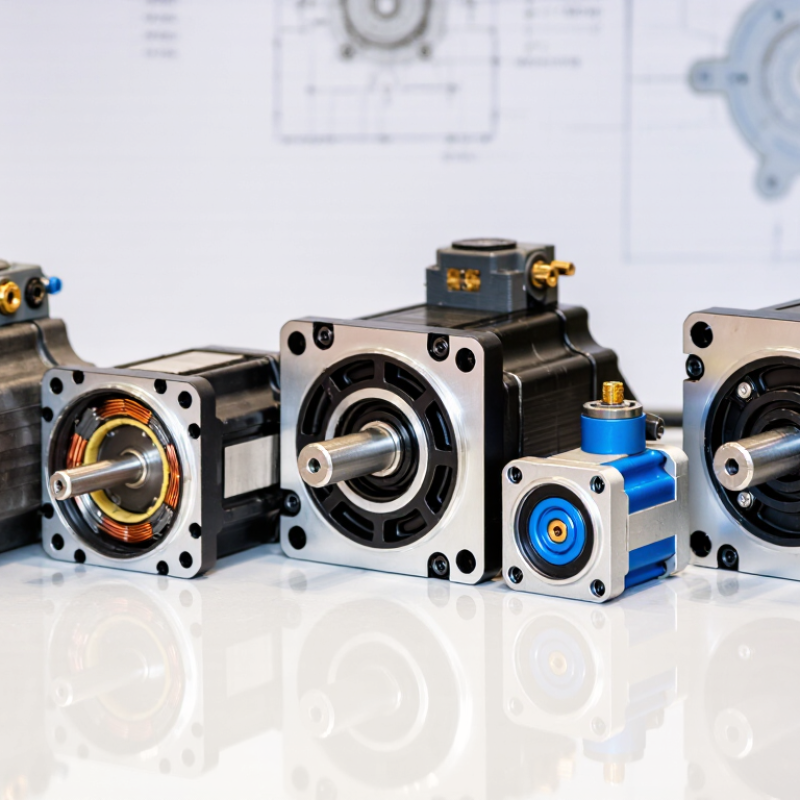
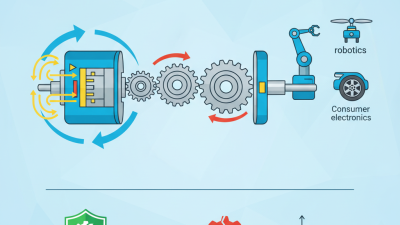
A DC motor converts electrical energy into rotational motion through magnetic force. Current flows through windings on the armature, creating a magnetic field. This field interacts with a stationary field, producing torque on the rotor. The rotor then turns a shaft that can drive a fan, pump, wheel, or conveyor.
In a brushed DC motor, carbon brushes transfer current to a rotating commutator. The commutator reverses the winding current at the right moment, keeping the torque moving in one direction. It works well, but brush friction creates heat, noise, and gradual wear. I have found that dust around the brush area can also affect performance, an easily missed detail. The motor needs suitable voltage and current control.
Different field arrangements create different motor types. Permanent-magnet DC motors use fixed magnets and offer simple speed control. Series-wound motors produce strong starting torque, making them useful for heavy loads. Shunt-wound motors maintain steadier speed under changing loads. Compound motors combine both field arrangements, though their behavior depends on careful design. Brushless DC motors replace brushes with electronic switching and position feedback. They usually run more quietly and require less mechanical maintenance. Still, their controller adds complexity. Measurements matter. Checking current, temperature, shaft load, and vibration during operation often reveals problems before failure. A motor may appear healthy while losing torque because of worn bearings, poor ventilation, or incorrect commutation timing.
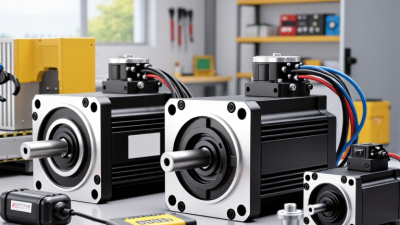
DC motors are commonly classified by commutation, the method used to switch current through the windings. Brushed DC motors use mechanical brushes and a segmented commutator. They deliver strong starting torque, but brush wear creates dust, noise, and maintenance needs. Brushless DC motors use electronic commutation instead. Position sensors or control algorithms switch the current through stationary windings. This design improves service life and supports precise speed control. The boundary is not always clean. Some compact motors use sensorless control, which can struggle during startup.
Construction provides another useful classification. Permanent-magnet motors use fixed magnets and offer a compact, efficient structure. Wound-field motors use separately excited, shunt, series, or compound field windings. Series motors produce high starting torque, while shunt motors maintain steadier speed under changing loads. Coreless and ironless designs reduce rotor inertia, helping rapid acceleration. Axial-flux constructions shorten the magnetic path, but cooling and manufacturing remain challenging.
According to the U.S. Department of Energy’s 2021 Industrial and Commercial Motor Systems Market Assessment, motor-driven systems consume about 68% of electricity in U.S. manufacturing. The International Energy Agency’s Energy Efficiency 2023 report also identifies motor systems as a major industrial efficiency opportunity. These figures explain why commutation and construction matter beyond laboratory specifications. In practice, a dusty workshop may favor brushless construction, even when initial controls cost more. That choice deserves measurement, not assumption.
Brushed DC motors remain practical where simple speed control, strong starting torque, and easy servicing matter. Their brushes transfer current to a rotating commutator. This contact creates friction, heat, and eventual wear. The International Energy Agency estimates electric motor systems use about 46% of global electricity, making motor selection an efficiency issue, not just a design preference.
Permanent-magnet brushed motors are common in compact tools, actuators, and small pumps. Permanent magnets provide a steady magnetic field, reducing size and improving efficiency. Shunt-wound motors connect the field winding in parallel with the armature. They offer relatively stable speed under changing loads. Series-wound motors place the field winding in series with the armature. Their starting torque is high, but speed can rise dangerously without a load. Compound-wound motors combine shunt and series characteristics. They suit equipment needing both starting force and better speed regulation.
Separately excited motors use an independent field supply. This arrangement allows precise control over speed and torque. It also adds wiring and control complexity. According to the U.S. Department of Energy’s Improving Motor and Drive System Performance guide, motor-system efficiency depends on proper sizing, controls, maintenance, and load matching. That point is often underestimated. A motor running far below its intended load may waste energy, even when its nameplate efficiency appears impressive. In field work, brush dust, commutator discoloration, and rising noise can reveal trouble early. Still, brushed motors are not automatically outdated. For intermittent duty and accessible maintenance, they can remain a sensible choice.
| Motor Family | Motor Type | Field-Flux Source | Torque and Speed Characteristics | Main Advantages | Main Limitations | Typical Applications |
|---|---|---|---|---|---|---|
| Brushed DC | Permanent-Magnet DC Motor (PMDC) | Permanent magnets provide the stationary magnetic field; the armature is switched mechanically by brushes and a commutator. | Good starting torque and approximately linear speed control through armature voltage. Speed decreases as load increases. | Compact Simple Efficient at small ratings | Brush and commutator wear; fixed magnetic flux limits field-control options and high-temperature operation. | Automotive actuators, small pumps, toys, office equipment, battery-powered tools, and small motion systems. |
| Brushed DC | Series-Wound DC Motor | The field winding is connected in series with the armature, so field current changes with load current. | Very high starting torque. Speed can rise dangerously at light or no load, so it should not normally operate without a mechanical load. | Very high starting torque Strong overload capability | Poor no-load speed regulation; speed varies significantly with load; requires protection against overspeed. | Electric traction, cranes, hoists, elevators, winches, and other equipment requiring high breakaway torque. |
| Brushed DC | Shunt-Wound DC Motor | The field winding is connected in parallel with the armature and normally receives nearly constant voltage. | Moderate starting torque with relatively constant speed over a broad load range. Speed regulation is better than that of a series motor. | Stable speed Good steady operation Adjustable speed | Lower starting torque than a series motor; field winding consumes power and adds size and losses. | Machine tools, conveyors, fans, pumps, printing equipment, and constant-speed industrial drives. |
| Brushed DC | Compound-Wound DC Motor | Combines shunt and series field windings. The series field may be cumulative or differential relative to the shunt field. | Cumulative-compound motors provide higher starting torque than shunt motors while retaining better speed regulation than series motors. | Balanced performance Good starting torque Improved regulation | More complex and costly than simpler brushed designs; differential compounding can cause unstable characteristics if incorrectly designed. | Presses, shears, elevators, compressors, conveyors, and drives with changing mechanical loads. |
| Brushed DC | Separately Excited DC Motor | The armature and field winding are supplied from electrically independent sources or separately controlled converters. | Wide and precise speed-control range. Armature-voltage control is commonly used below base speed, while field weakening can extend speed above base speed. | Excellent control Wide speed range Independent adjustment | Requires additional field-supply equipment and control circuitry; brushes and commutators still require maintenance. | Laboratory drives, controlled industrial machinery, test stands, rolling mills, and older variable-speed systems. |
| Brushed DC | Universal Motor | A series-connected field and armature circuit is designed to operate on either DC or single-phase AC. | Very high starting torque and high operating speed. Performance and power factor are generally less favorable on AC than on DC. | AC/DC operation High power-to-weight ratio High speed | Brush wear, acoustic noise, electromagnetic interference, and limited suitability for quiet or maintenance-free applications. | Portable power tools, vacuum cleaners, kitchen appliances, sewing machines, and compact high-speed equipment. |
| Brushless DC | Permanent-Magnet Brushless DC Motor (BLDC) | Permanent-magnet rotor; electronic switches replace the mechanical brush-and-commutator system. | Good efficiency and dynamic response. Electronic commutation enables speed control, but a controller and rotor-position information are required. | Low maintenance High efficiency Quiet commutation | Requires an electronic controller; magnets can be affected by excessive temperature or demagnetizing conditions. | Computer cooling fans, drones, electric vehicles, pumps, robotics, appliances, and precision motion systems. |
| Brushless DC | Electronic-Commutation DC Motor | Permanent magnets or controlled rotor excitation are coordinated with solid-state switching rather than mechanical contacts. | Speed, torque, and regenerative operation can be controlled through software and power electronics. | Precise control Reduced wear Regenerative capability | Higher system complexity, switching losses, electromagnetic compatibility requirements, and dependence on controller design. | Servo systems, automated production equipment, electric transportation, robotics, and energy-efficient variable-speed drives. |
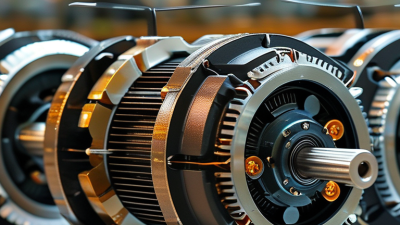
Brushless DC motors are commonly divided by rotor position, winding shape, and control method. The inrunner design places the rotor inside the stator. It supports high speed, compact packaging, and efficient heat removal through the outer housing. Small pumps, fans, and precision tools often benefit from this arrangement. The outrunner design surrounds the stator with a rotating shell. Its larger effective radius produces stronger torque at lower speed. That makes it useful for mobile equipment, cooling fans, and lightweight drive systems.
There is also the axial-flux type. Its magnetic field moves along the shaft axis, creating a thin, disc-like motor. This geometry can deliver high torque density, but cooling and manufacturing alignment remain difficult. Sensored and sensorless versions form another important classification. Hall sensors improve starting control and low-speed feedback. Sensorless control reduces wiring, but it may hesitate under heavy starting loads. Small details matter.
The International Energy Agency has estimated that electric motor systems consume roughly 45% of global electricity. The U.S. Department of Energy also identifies motor-driven equipment as a major industrial efficiency opportunity. These figures explain the growing interest in BLDC technology, although they do not measure BLDC motors alone. The IEA’s Global EV Outlook 2024 reported nearly 14 million electric car sales in 2023, but electric vehicles use several motor architectures. A simple “best type” ranking would therefore be misleading. In practical testing, temperature, load profile, controller tuning, and acoustic noise often matter more than peak efficiency.
The chart compares representative operating-speed ranges for common DC motor categories. Brushed DC motors use mechanical commutation, while brushless DC motors use electronic commutation. Inner-rotor, outer-rotor, and pancake designs are the main brushless DC motor configurations.
Typical speed ranges are representative engineering values and vary with motor size, load, voltage, controller, cooling, and application.
Brushed DC motors remain practical when low cost, simple control, and strong starting torque matter. Their brushes physically switch current, making speed control straightforward. However, brush wear creates maintenance needs and electrical noise. Shunt motors deliver steadier speed under changing loads, while series motors provide powerful starting torque for lifting equipment. Compound motors sit between these behaviors, but their performance depends heavily on winding design and load conditions.
Brushless DC motors replace mechanical commutation with electronic switching. They usually offer higher efficiency, longer service life, and quieter operation. That advantage suits drones, pumps, medical equipment, and compact automation. The trade-off is clear: sensors, controllers, and software increase system cost.
The International Energy Agency reports that electric motor systems consume around half of global electricity, so small efficiency gains can matter at scale. The U.S. Department of Energy also estimates motor-driven equipment uses about 69% of industrial electricity in the United States.
Permanent-magnet DC motors produce strong torque from a compact frame. They fit battery-powered tools and mobile machines well. Yet magnets can raise cost and create thermal design challenges. In field experience, rated efficiency can mislead; frequent starts, poor cooling, and oversized motors change real performance. The “best” motor is rarely universal. Engineers should compare duty cycle, torque peaks, control hardware, noise, maintenance, and lifetime energy use, not efficiency alone. Some selection decisions still deserve a second review.
Sources: International Energy Agency, Energy Efficiency 2023; U.S. Department of Energy, Motor Systems Market Assessment, 2021.