How to Choose the Right DC Motor Gear Motor?
Choosing the right Dc Motor Gear Motor is a practical engineering decision, not a catalog exercise. The correct unit must deliver torque, speed, duty-cycle reliability, and controlled motion inside real operating conditions. A motor that performs well on a test bench may overheat beside a dusty conveyor or stall during repeated starts.
Industry data explains why this choice deserves attention. The International Energy Agency and UNIDO estimate that electric motor systems consume roughly 43–46% of global electricity. Reports from Grand View Research and MarketsandMarkets also forecast continued growth in motor and motion-control applications. Their market definitions differ, however. That matters. Comparing figures without checking scope can create false confidence.
Motor researcher Ion Boldea has described electric motors as “the workhorses of modern industry.” His observation remains useful, but it is incomplete. The gearbox changes the application dramatically. Reduction ratio, backlash, gearbox efficiency, shaft loading, noise, and thermal limits can matter as much as rated power. IEC 60034 guidance supports careful evaluation of motor performance and testing requirements. Yet standards cannot replace field experience.
A reliable selection process begins with measurable details: load torque, target output speed, acceleration time, mounting position, ambient temperature, and expected operating hours. For example, a 60-rpm conveyor may need high starting torque, while a compact actuator may prioritize low backlash and quiet operation. Small details matter. A common mistake is choosing by wattage alone. That shortcut can produce poor efficiency, premature wear, or an undersized gearbox. This guide examines those trade-offs and shows how to select a Dc Motor Gear Motor with stronger technical confidence.
Understanding DC Gear Motor Types and Operating Principles
How to Choose the Right DC Motor Gear Motor?
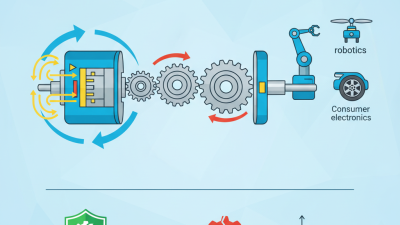
A DC gear motor combines an electric motor with a gearbox. The motor produces rotation, while gears reduce speed and increase output torque. Brushed DC gear motors use mechanical brushes and a commutator. They are simple, affordable, and easy to control. However, brush wear can reduce service life over time.
Brushless DC gear motors use electronic commutation instead. They usually offer longer service life, quieter operation, and better efficiency. They may also require a suitable controller. Gearbox design matters too. Spur gears are compact and efficient for moderate loads. Planetary gears provide higher torque in a small space. Worm gears offer strong speed reduction, but efficiency can be lower. Backlash remains an important detail.
Tips:
Check required speed, continuous torque, starting torque, voltage, duty cycle, and shaft load. Leave a safety margin for friction and sudden resistance. Do not select a motor using torque alone. In real applications, calculated values often differ from workshop conditions. Temperature, alignment, lubrication, and repeated starts can change performance. A motor that works perfectly on a test bench may struggle inside a tight mechanism. Measure actual load when possible. This small step prevents many disappointing choices.
Defining Torque, Speed, Voltage, and Load Requirements
How to Choose the Right DC Motor Gear Motor?
Choosing the right DC gear motor starts with the load, not the catalog photo. Define the required output torque in newton-meters. Include friction, gravity, acceleration, and gearbox losses. A conveyor may need more torque during startup than during steady movement. Select a motor with a practical torque margin, often 25 to 50 percent. Avoid continuous operation near stall torque. It creates heat and shortens motor life.
Tips: Measure the real load if possible. Check speed under load, not only no-load speed. Confirm the supply voltage matches the motor rating. Record startup current before choosing the driver. A small test pulley and spring scale can reveal surprising resistance.
Speed, voltage, and load must work together. Higher gear reduction increases torque but lowers output speed. Gearbox efficiency also reduces the final torque. Check the required revolutions per minute at the shaft, then compare that value with the motor’s loaded performance. Voltage affects speed and current, but raising voltage beyond the rating can cause unsafe overheating. Duty cycle matters too. Ten seconds of movement differs from continuous operation. My first estimate is often wrong, especially when the load has hidden friction. Recheck measurements after installation. Listen for unusual noise, inspect temperature, and watch current during repeated cycles. A motor that works once may still be unsuitable for daily service.
How to Choose the Right DC Motor Gear Motor? - Defining Torque, Speed, Voltage, and Load Requirements
| Application Profile |
Load Force
(N) |
Effective Radius
(m) |
Calculated Load Torque
(N·m) |
Safety Factor |
Target Output Torque
(N·m) |
Required Output Speed
(rpm) |
Typical DC Supply
(V) |
Duty Requirement |
Indicative Gear Ratio |
| Light positioning flap |
20 |
0.05 |
1.00 |
2.0× |
2.00 |
10–30 |
12 |
Intermittent |
20:1–80:1 |
| Small conveyor roller |
40 |
0.04 |
1.60 |
1.5× |
2.40 |
60–120 |
24 |
Continuous |
10:1–30:1 |
| Rotary valve actuator |
100 |
0.02 |
2.00 |
2.5× |
5.00 |
5–15 |
12 or 24 |
Intermittent |
50:1–200:1 |
| Compact wheel drive |
80 |
0.06 |
4.80 |
2.0× |
9.60 |
80–160 |
24 |
Short continuous |
15:1–40:1 |
| Lead-screw lifting mechanism |
150 |
— |
0.27* |
2.0× |
0.55* |
5–20 |
24 |
Intermittent |
30:1–100:1 |
Selection notes: Calculate rotational load torque using
T = F × r, where F is the tangential load force in newtons and
r is the effective radius in meters. Select a motor gear motor whose rated output torque exceeds the target output torque, not merely its stall torque. Allow additional capacity for startup friction, acceleration, shocks, incline loads, and gearbox efficiency.
*Lead-screw example: The torque estimate uses
T = F × lead ÷ (2π × efficiency), assuming a 4 mm lead and 35% screw efficiency. Actual requirements depend on screw geometry, friction, acceleration, and whether back-driving must be prevented.
Selecting the Correct Gear Ratio and Motor Size
How to Choose the Right DC Motor Gear Motor?
Selecting the Correct Gear Ratio and Motor Size
Choosing a DC gear motor starts with the load, not the motor catalog. Measure the required output speed, torque, operating time, and available space. For a wheel moving at 60 revolutions per minute, a high-speed motor may need a 20:1 gear ratio. Output speed equals motor speed divided by the gear ratio. Output torque roughly equals motor torque multiplied by the ratio and gearbox efficiency.
Do not size the motor from running torque alone. Check starting torque, acceleration, friction, and occasional overloads. A conveyor carrying a heavy box may need extra torque during startup. A practical design often adds a 20–30 percent torque margin. This is only a starting point. Duty cycle matters too. A motor running for ten seconds every minute can survive more load than one running continuously. Watch the current.
I once selected a compact motor that met the calculated torque but overheated during testing. The gearbox ratio was correct, but the motor lacked thermal capacity. That mistake changed my process. I now compare rated torque, stall current, temperature rise, and gearbox efficiency together. Higher ratios provide more torque, but they can reduce speed and increase backlash. Lower ratios may run faster, yet they can stall under sudden loads. Test the real mechanism with its actual wiring, voltage, and load. Calculations help, but measurements reveal what assumptions missed.
Evaluating Efficiency, Durability, Mounting, and Control Options
How to Choose the Right DC Motor Gear Motor?
Choosing a DC gear motor starts with the real load, not the catalog’s maximum rating. Measure required torque, speed, duty cycle, and starting resistance. A conveyor carrying uneven boxes may need higher starting torque than its average calculation suggests. Efficiency matters because lost energy becomes heat. Check efficiency at the operating speed, not only at the rated point. A motor running constantly near its limit may become hot, noisy, and short-lived.
Tips: Leave a sensible torque margin. Inspect shaft diameter, mounting holes, gearbox clearance, and cable direction before ordering. A small mismatch can force costly mechanical changes. For control, basic voltage control suits simple speed adjustment, while feedback control offers steadier speed under changing loads. Encoders can improve positioning, but they also add wiring, programming, and failure points. Keep that trade-off visible.
Durability depends on more than metal housing. Look at bearing support, gear material, lubrication, expected cycles, and environmental exposure. Dust, vibration, and repeated reversals can reveal weaknesses quickly. In field testing, listen for rising gear noise and check housing temperature after several hours. These signs often appear before failure. Mount the motor on a rigid, aligned surface. Poor alignment wastes torque and may damage the gearbox. No selection is perfect. Recheck assumptions after the first prototype, because real loads often behave differently from calculations.
How to Choose the Right DC Motor Gear Motor?
Typical gearbox efficiency varies with ratio, load, lubrication, temperature, and operating speed. Planetary, helical, and bevel gear systems generally provide higher efficiency, while worm gear systems trade efficiency for high reduction ratios and compact right-angle mounting.
For durability, compare rated duty cycle, allowable radial and axial loads, thermal limits, and expected service life. Also confirm the mounting orientation, shaft configuration, available space, and whether the motor controller supports the required voltage, current, speed feedback, braking, and direction control.
Comparing Specifications, Applications, and Total Operating Costs
Choosing the right DC motor gear motor starts with the load, not the catalogue headline.
Measure required torque, speed, voltage, duty cycle, and shaft direction.
A motor rated at 20 revolutions per minute may slow sharply under real resistance.
Check the torque curve at the working point, not only the stall figure.
Application details change the decision.
A conveyor running eight hours daily needs better thermal performance than a small positioning mechanism used twice an hour.
Compare gearbox efficiency, noise, backlash, mounting space, and protection against dust or moisture.
Also check starting current. A weak power supply may reset the controller when the motor starts.
Test it.
Total operating cost includes more than the purchase price.
Higher efficiency can reduce electricity use, especially in continuous-duty equipment.
A gearbox with suitable lubrication may require less maintenance, while poor alignment can damage bearings within months.
Replacement access matters too.
Ten minutes of downtime can cost more than a modest efficiency difference.
I once focused too heavily on peak torque and overlooked heat buildup during repeated starts.
That mistake changed the selection process.
Run a short load test with the intended controller, coupling, and power supply.
Record temperature, current, sound, and speed after several cycles.
Datasheets guide the choice, but measured behavior deserves the final vote.