How to Choose the Right Electric Motor DC Motor for Your Project?
When embarking on a project that involves moving parts, selecting the right electric motor DC motor is critical. This decision can significantly impact the efficiency and performance of your design. These motors are widely used due to their versatility and simplicity. However, not all DC motors are created equal, and choosing the right one requires careful consideration.
Understanding your project requirements is essential. Factors such as torque, speed, and power supply voltage play crucial roles in your selection. Each application may demand different specifications. For instance, a motor designed for a small robot may differ greatly from one meant for industrial machinery. The subtle differences can lead to substantial effects on functionality and cost.
It's important to weigh your options carefully. Sometimes, a motor may seem perfect on paper but could underperform in real-world conditions. Gathering data and consulting experts can improve your choice process. Indeed, mistakes in this phase can lead to frustration and wasted resources. So, take time to analyze all potential electric motor DC motor candidates before making a commitment.
Understanding the Basics of DC Motors
When selecting a DC motor for your project, understanding the basics is crucial.
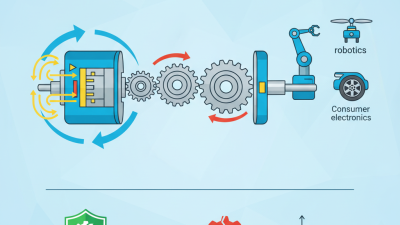
DC motors convert electrical energy into mechanical motion. They are simple to control, making them ideal for various applications.
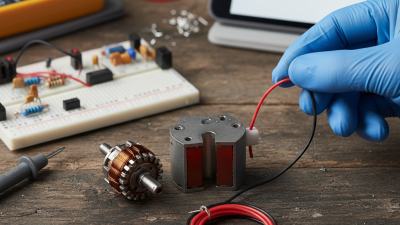
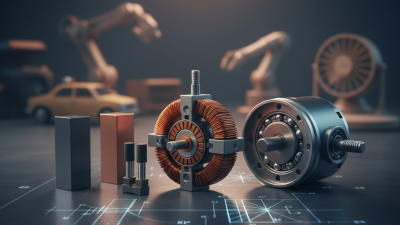
The key components of a DC motor include the rotor, stator, and commutator.
Knowing how these parts interact helps in choosing the right motor.
Tips: Always consider the voltage and current requirements. Ensure compatibility with your power supply. Look for specifications that align with your project needs.
Another important aspect is torque and speed characteristics.
Larger projects may require higher torque, while smaller, intricate designs may need quick, agile movement.
Evaluate what your project demands to avoid performance issues later.
Tips: Use simulation software to predict motor behavior. This can save time and resources.
Measure the physical size and weight constraints as well, as they can impact the overall design of your project.
Keeping these details in mind leads to more informed choices.
Identifying the Requirements of Your Project
When selecting a DC motor for your project, it is crucial to fully understand your requirements. Start by defining the application. Is it for precision control, speed, or torque? According to industry reports, motors can vary significantly in performance. For instance, a motor designed for low-speed applications will differ from one intended for high-torque uses.
Next, consider the size and weight constraints of your project. A compact design might necessitate a smaller motor, but this could impact torque output. Data from surveys show that nearly 40% of projects fail due to misalignment between requirements and motor selection. Evaluate the operational environment as well. Will the motor face extreme temperatures or moisture? Navigating these parameters early can lead to a successful project outcome.
Explore different power supply options as well. The power source can affect the motor's efficiency and performance. Reports indicate that choosing the wrong power configuration can reduce motor lifespan by up to 50%. Understanding your project's specific needs is vital. It’s easy to overlook details, but each requirement helps ensure reliable operation and optimal performance.
Evaluating Key Specifications of DC Motors
When evaluating DC motors for your project, understanding key specifications is crucial. Voltage rating is one of the most important factors. It determines how much power the motor can handle and directly influences efficiency. Choose a voltage that matches your project needs closely. Underestimating this can lead to poor performance.
Another critical specification is the motor's torque. This is the twisting force that the motor can exert. Higher torque values are essential for applications requiring more strength to move weights. Many users overlook torque, focusing only on speed. You may find that a motor with lower speed but higher torque performs better in your application.
Speed rating, measured in RPM, indicates how fast a motor turns. However, a higher RPM might not always be the best choice. It's important to balance speed and torque. Evaluating load requirements will guide you here. Consider the dynamic performance too. In some cases, motors operate below their specified ratings. If you use a motor beyond its capabilities, it could overheat. Reflect on the application's demands before making a decision.
Key Specifications of DC Motors
This chart displays key specifications of typical DC motors, including voltage, current, power, RPM, and torque. Understanding these parameters is essential for selecting the right DC motor for your project.
Comparing Different Types of DC Motors
When selecting the right DC motor for your project, understanding the various types is crucial.
DC motors can be classified into brushed, brushless, and stepper motors.
Brushed motors are regular and cost-effective. They operate using a commutation
system that involves physical contact. This could lead to wear and inefficiency over time. Reports indicate that
brushed motors account for around 50% of all electric motor sales due to their simplicity.
Brushless motors have gained popularity for their efficiency and longer
lifespan. They are more complex and typically cost more, yet they offer better performance. A study by the
International Electrotechnical Commission noted that brushless motors can improve energy efficiency
by up to 30% compared to their brushed counterparts. This is significant when considering power
consumption over time in any project.
Stepper motors, on the other hand, provide
precise control of movement. They excel in applications requiring accurate positioning. However, they can
experience heating issues, affecting performance. According to industry analysis, around 15% of
applications prefer stepper motors due to their unique advantages.
Each motor type has distinct characteristics that can impact your project's outcome. Careful consideration
of these factors will lead to more effective motor selection, tailored to specific needs.
Making an Informed Decision for Your Project Needs
When choosing a DC motor for your project, understanding your specific needs is crucial. Consider the motor's voltage and current requirements. Will it handle your intended application? Look closely at the torque and speed ratings. Sometimes, we overlook these aspects, leading to inefficiencies.
Check the motor's efficiency and lifespan. A higher-efficiency motor can save energy, which matters in long-term projects. Reflect on whether you need a brushed or brushless motor. Brushless motors are often more efficient but can be more complex to control. Each choice has its pros and cons, and you should weigh them carefully.
Don't underestimate the importance of compatibility with your existing hardware. Ensure that the motor fits seamlessly into your design. It's easy to make assumptions about fit and function, but testing can reveal unexpected challenges. Remember, informed decisions often come from thorough research and a willingness to adapt.
How to Choose the Right Electric Motor DC Motor for Your Project? - Making an Informed Decision for Your Project Needs
| Motor Type |
Voltage (V) |
Power (W) |
Speed (RPM) |
Torque (Nm) |
Efficiency (%) |
| Brushed DC Motor |
12 |
50 |
6000 |
0.2 |
80 |
| Brushless DC Motor |
24 |
100 |
3000 |
0.5 |
90 |
| Coreless DC Motor |
3.7 |
10 |
15000 |
0.01 |
85 |
| Geared DC Motor |
12 |
75 |
200 |
1.5 |
75 |