Leave Your Message

How to Choose the Right Brushed DC Electric Motor?

Choosing the right Brushed Dc Electric Motor is less about selecting the largest rating. It is about matching the motor to the real operating conditions. A conveyor moving steadily needs different behavior from a valve actuator that starts and stops repeatedly. Speed, torque, voltage, duty cycle, load inertia, and available space all matter.

Dr. Hamid A. Toliyat, a respected electric-machine researcher, emphasizes a practical principle: “Motor selection must begin with the application’s speed-torque requirements, not the nameplate alone.” That advice is easy to overlook. A motor marked 12 volts may still overheat when forced to deliver continuous stall-like torque. A small motor can also fail early when its gearbox, shaft, or brushes face unexpected mechanical resistance. Ratings need context.

This guide examines the details that experienced engineers check before purchase. It considers starting torque, continuous torque, no-load speed, brush wear, electrical noise, cooling, and controller compatibility. It also explains why gear reduction can improve performance without solving every design problem. Measure the load.

A datasheet may look precise, yet real machines rarely behave perfectly. Friction changes. Bearings age. The supply voltage may sag during startup. Even a carefully chosen Brushed Dc Electric Motor can disappoint if the duty cycle is misunderstood. That is why prototype testing remains valuable. Record current, temperature, sound, and speed during realistic operation. Do not trust one number. Reliable selection comes from combining manufacturer data, engineering calculations, safety margins, and hands-on observation.
How to Choose the Right Brushed DC Electric Motor?

Define Brushed DC Motor Types and Operating Principles

How to Choose the Right Brushed DC Electric Motor?

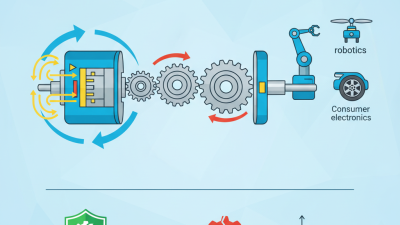
A brushed DC motor converts electrical energy into rotation through magnetic interaction. Its key parts include a rotor, stator, commutator, and carbon brushes. The brushes deliver current to changing rotor coils. The commutator reverses coil polarity at the correct position. This keeps torque moving in one direction.

Permanent-magnet brushed motors provide simple control and compact construction. They suit fans, pumps, toys, and small actuators. Series-wound motors produce high starting torque under heavy loads. However, their speed can rise dangerously without proper load control. Shunt-wound motors offer steadier speed, while compound motors balance torque and speed. This classification helps, but real applications are less tidy. Heat, brush wear, friction, and electrical noise can change performance.

Tips:

Match the motor’s rated voltage with the available supply. Check stall current before selecting wires or a controller. Measure starting torque, not only running torque. A motor may look suitable on paper, yet fail during repeated starts. Leave ventilation space around the housing. Inspect brush length after extended operation. Use suppression components when switching creates interference. Do not ignore sound; a sharp clicking noise may indicate commutator damage. Temperature testing is also valuable, although one short test cannot represent every working condition.
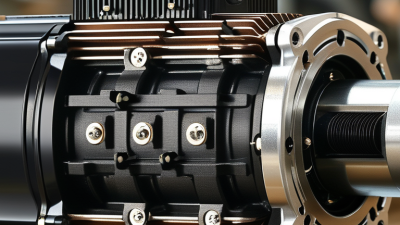
Identify Voltage, Speed, Torque, and Power Requirements

How to Choose the Right Brushed DC Electric Motor?

Identify Voltage, Speed, Torque, and Power Requirements

Choosing a brushed DC motor starts with the actual electrical supply, not the motor’s appearance. Check whether the system provides 6, 12, 24, or another voltage. A motor rated for lower voltage may overheat quickly. A higher-voltage motor may run weakly or fail to start. Measure the supply during startup, because voltage can drop when the load suddenly engages.

Speed must match the mechanism, not just the catalog’s no-load figure. If a motor lists 3,000 rpm without resistance, expect less speed under working conditions. Calculate the required output speed after gears, pulleys, or wheels. I once selected a motor by free-running speed and ignored friction. It worked on the bench, then stalled in the assembly.

Torque determines whether the motor can move the load. Estimate running torque, starting torque, and short overloads separately. A conveyor carrying 8 kilograms may need much more starting torque than running torque. Power connects these values: power equals torque multiplied by speed. Leave practical headroom, but avoid excessive oversizing, which can increase cost and current demand. Test the motor with the real battery, wiring, controller, and load. Small details matter. Record temperature after repeated cycles. If the casing becomes too hot to touch, the calculation needs another review.

Match Motor Performance to the Application’s Load Profile

How to Choose the Right Brushed DC Electric Motor?

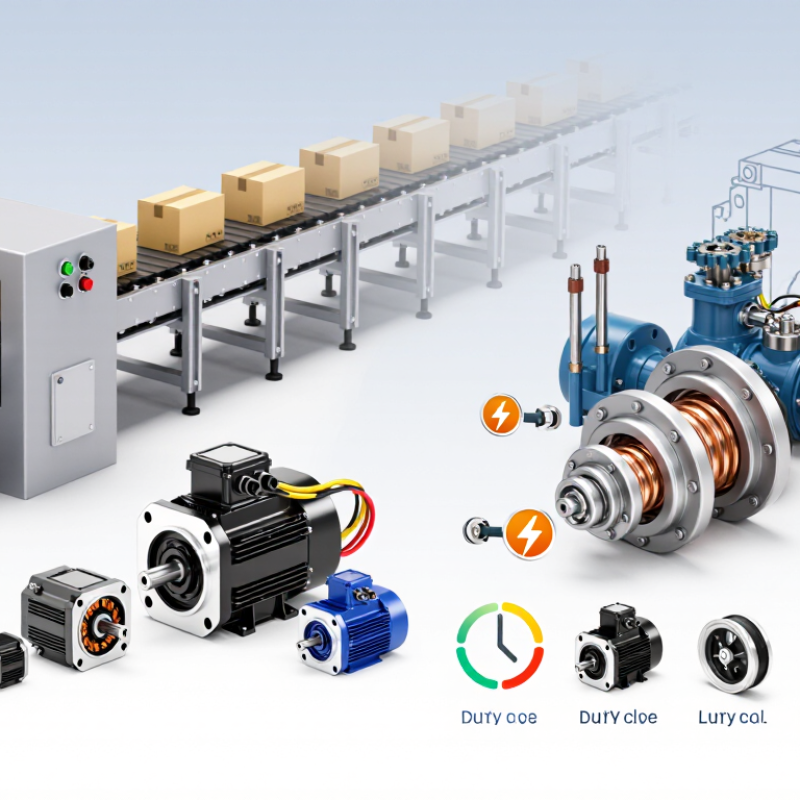
Match motor performance to the application’s load profile, not just its rated voltage. A brushed DC motor driving a small conveyor may run continuously, while a valve actuator may operate for only ten seconds per cycle. These duties create very different thermal stresses. IEC 60034-1 defines duty classes, including continuous duty and short-time duty, which help engineers describe real operating patterns.

Start with the load curve. Record starting torque, running torque, speed, acceleration time, and stall risk. A motor that survives a brief 2.5-times current surge may still overheat during repeated starts. The U.S. Department of Energy reports that motor-driven systems use about 23% of total U.S. electricity, making correct sizing an efficiency issue, not merely a purchasing detail. Oversizing can increase cost and reduce controllability.

Check the hardest moment.

For a lift mechanism, gravity may demand peak torque at startup. For a fan, torque usually rises sharply with speed. In practical testing, measure current after the motor reaches temperature, then repeat the cycle under the heaviest expected load. The International Energy Agency has estimated that electric motor systems consume over 40% of global electricity and roughly 70% of industrial electricity. Those figures deserve attention, although they do not replace application-specific testing. A carefully matched motor may deliver lower heat, longer brush life, and steadier speed. Yet assumptions remain risky. Real loads are often messier than the spreadsheet.

How to Choose the Right Brushed DC Electric Motor? - Match Motor Performance to the Application’s Load Profile

Application Load Profile Typical Speed Range Typical Continuous Torque Starting or Peak Torque Requirement Operating Duty Recommended Motor Characteristics Key Selection Considerations
Light Conveyor or Roller Drive 100–600 rpm 0.05–0.50 N·m 1.5–2.5 × continuous torque Continuous or frequent starts and stops High starting torque, moderate speed, effective thermal dissipation, and optional gearbox compatibility Include roller friction, belt tension, product weight, acceleration time, and gearbox efficiency in the torque calculation.
Small Fan or Blower 1,500–5,000 rpm 0.01–0.15 N·m Usually 1.2–1.5 × continuous torque Long-duration continuous operation High efficiency at the target speed, low vibration, balanced rotor, and adequate cooling Fan loads generally increase rapidly with speed; verify that the motor remains within its continuous current and temperature limits.
Small Pump 1,000–4,000 rpm 0.03–0.30 N·m 1.5–2.0 × continuous torque Continuous, intermittent, or cyclic Stable speed regulation, corrosion-resistant construction where required, and sufficient overload capacity Account for fluid viscosity, pressure head, flow rate, priming conditions, and possible operation against a blocked outlet.
Gear-Driven Linear Actuator 30–500 rpm at the motor shaft 0.10–2.00 N·m 2.0–3.0 × continuous torque Short cycles with rest periods High stall tolerance, strong low-speed torque, controlled acceleration, and suitable gearbox integration Check static load, acceleration load, screw efficiency, back-driving behavior, end-stop impact, and allowable stall duration.
Valve, Damper, or Latch Mechanism 10–300 rpm 0.20–3.00 N·m 2.0–4.0 × continuous torque Low duty cycle with high breakaway load High breakaway torque, robust commutation, gearbox compatibility, and reliable position feedback Measure breakaway torque rather than relying only on running torque; consider seal friction, pressure differential, and mechanical stops.
Printer, Feeder, or Small Transport Mechanism 200–2,000 rpm 0.01–0.20 N·m 1.5–2.5 × continuous torque Frequent short cycles and rapid reversals Low cogging, precise speed response, low electrical noise, and good brush and commutator quality Evaluate acceleration time, reversal frequency, speed ripple, acoustic noise, brush wear, and electromagnetic interference.
Battery-Powered Mobile Mechanism 100–3,000 rpm 0.05–1.00 N·m 2.0–3.0 × continuous torque Intermittent with variable load High efficiency over the actual operating range, low no-load current, and compatibility with the battery voltage Check battery voltage sag, controller current limit, peak current duration, ambient temperature, and energy consumption per cycle.
High-Inertia Flywheel or Spindle 1,000–10,000 rpm 0.02–0.50 N·m 1.2–2.0 × continuous torque during acceleration Extended acceleration followed by steady running High permissible speed, low rotor imbalance, reliable commutation, and sufficient acceleration thermal capacity Calculate acceleration torque from rotational inertia; verify overspeed margin, bearing limits, balancing, and regenerative voltage during deceleration.
Selection note: The ranges above are general engineering reference values, not ratings for a specific motor. Final selection should be based on the required voltage, speed, continuous torque, peak torque, duty cycle, ambient temperature, allowable current, mechanical mounting, brush life, and controller limits. A practical design margin is commonly 20–30% above the calculated continuous torque, provided that the motor does not exceed its thermal or peak-current limits.

Evaluate Size, Mounting, Controls, Noise, and Maintenance Needs

How to Choose the Right Brushed DC Electric Motor?

Start with the load, not the catalog photo. Measure torque, speed, duty cycle, and available space. A compact motor may overheat when repeatedly starting a heavy mechanism. Confirm the shaft diameter and radial load before selecting a mounting style. Foot, face, and flange mounts can look similar, but alignment errors create vibration and premature bearing wear.

Controls deserve equal attention. A PWM controller can regulate speed efficiently, while current limiting protects the armature during startup. Add an encoder when position accuracy matters. The International Energy Agency reports that electric motor systems consume about 46% of global electricity. Small control improvements can therefore influence meaningful energy use. Still, brushed motors can produce electrical noise during commutation. Test the motor with the actual controller, cable length, and load. Laboratory results may not match a metal enclosure.

Noise and maintenance are practical selection filters. IEC 60034-9 provides methods for measuring motor airborne sound, but the final machine can sound louder after gearbox or panel installation. Brush wear depends on current, speed, dust, and operating hours. The U.S. Department of Energy identifies motor-driven systems as a major share of industrial electricity consumption, making preventive maintenance worthwhile. Keep spare brushes and inspect the commutator periodically. Brush life is not always predictable. I have seen a correctly sized motor fail early because ventilation was blocked. That detail is easy to miss. Choose accessible mounting, protected wiring, and a realistic service schedule.

Compare Efficiency, Durability, Cost, and Supplier Support

How to Choose the Right Brushed DC Electric Motor?

Efficiency is not just a catalog number. Measure current draw under your real load, speed, and duty cycle. A motor drawing less current may reduce battery stress. However, it can produce less starting torque. Check both values. During testing, record temperature after thirty minutes. Excessive heat often signals poor sizing or insufficient ventilation. Brushed motors also need practical durability checks. Inspect brush wear, commutator condition, noise, and vibration. A motor running quietly today may degrade quickly under frequent reversals.

Cost requires more than comparing purchase prices. Include controllers, mounting changes, replacement brushes, downtime, and energy use. A cheaper motor can become expensive when access is difficult. That lesson is easy to miss. Ask suppliers for efficiency curves, torque-speed data, insulation details, and verified test conditions. Reliable documentation matters more than polished claims. Supplier support also affects operating risk. Check response times, spare-part availability, technical drawings, and warranty procedures. Request a sample before ordering in volume. Test it with your actual gearbox and load. I once underestimated startup torque, and the motor stalled during cold operation. That mistake changed the selection criteria.

Tips: Create a simple comparison sheet. Record efficiency, peak temperature, noise, expected brush life, total cost, and support quality. Ask clear questions. Keep test results, even when they look disappointing. Those results often reveal the right motor faster than assumptions.