The demand for compact motion systems is rising across robotics, laboratory equipment, medical devices, smart locks, and automated retail. Recent reports from Grand View Research and MarketsandMarkets connect this growth with wider adoption of industrial automation, mobile equipment, and connected manufacturing. These trends make the 12v Dc Gear Motor more important for global buyers seeking controlled movement in limited spaces.
Small does not mean simple. A motor turning a conveyor roller may need 3 N·m of torque, low backlash, and continuous operation for eight hours. A battery-powered actuator may prioritize stall current, noise, and gear efficiency. Supplier selection should therefore examine more than catalog speed. Torque curves, gearbox materials, duty cycles, shaft tolerances, brush life, IP ratings, and thermal behavior deserve direct comparison. Certification documents also matter, especially when products enter regulated markets.
Industry guidance from IEC standards and quality practices such as ISO 9001 can support a more reliable evaluation. However, compliance claims still require verification. Request test reports, sample units, production photos, and references from comparable applications. Lead time may look attractive until a custom shaft delays the entire assembly. That happens.
This guide reviews leading 12V DC gear motor suppliers for international buyers, focusing on engineering capability, customization, quality control, export experience, and after-sales support. Public rankings are not absolute. A supplier strong in automotive actuators may be unsuitable for quiet medical equipment. Bench testing remains essential, because a polished datasheet cannot reveal every vibration, temperature rise, or startup failure.
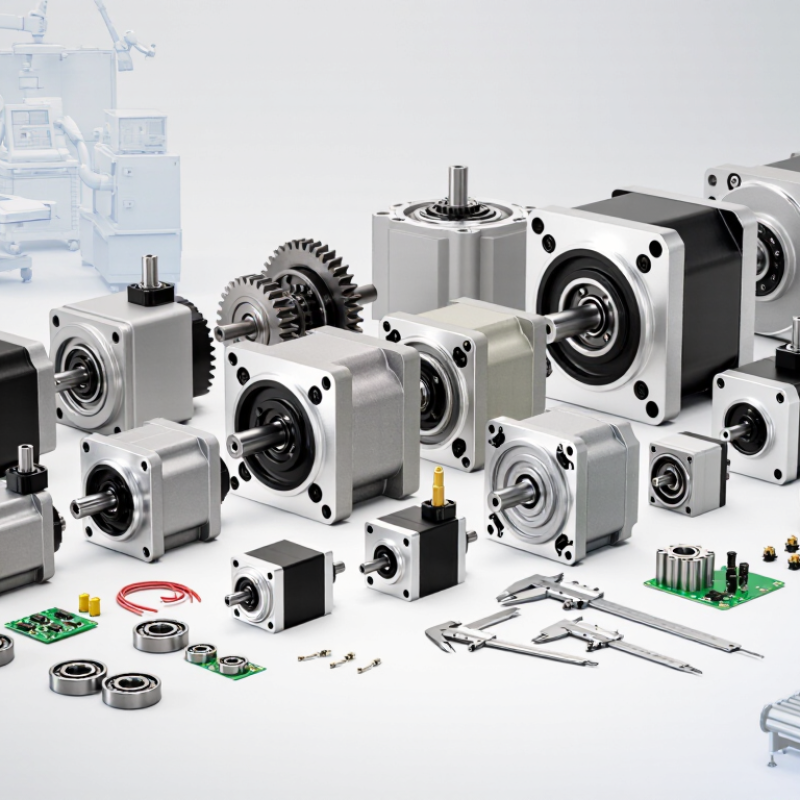
A 12V DC gear motor converts electrical power into controlled rotary motion. Its useful performance depends on torque, speed, power, and duty cycle. Torque is measured in newton-metres and shows how much turning force reaches the shaft. Speed is usually listed in revolutions per minute, or RPM. Higher reduction ratios increase torque but reduce output speed.
Power links these values: P = T × ω. A motor producing 2 Nm at 60 RPM delivers about 12.6 watts of mechanical power. Do not confuse rated torque with stall torque. Stall torque can damage windings if applied continuously. Current also rises sharply near stall conditions.
In practical testing, I check starting load, gearbox noise, and temperature after repeated cycles. A clean specification sheet can still hide weak real-world performance.
Tips: Ask suppliers for continuous torque, peak torque, no-load speed, rated current, and duty-cycle data. Confirm whether the motor supports S1 continuous operation or only intermittent S3 service. Test the motor with your actual load. Measure twice. A ten-minute test may miss heat buildup during an eight-hour machine cycle. Also inspect shaft play, connector quality, and protection against dust or moisture. These details often matter more than an attractive RPM figure.
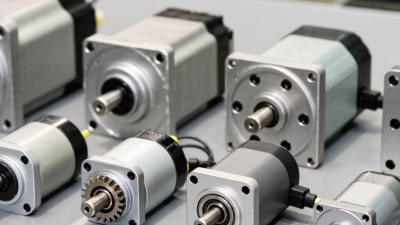
Choosing a 12V DC gear motor supplier requires more than comparing prices or rated torque. Global buyers should examine efficiency, IP ratings, noise, and expected lifetime under real operating conditions. A motor claiming 80% efficiency may perform differently at low speed, high load, or frequent starts. Request test data showing voltage, current, torque, and speed at several working points.
IP ratings also need careful interpretation. An IP65 motor can resist dust and water jets, but it may not suit permanent immersion or harsh chemicals. Check sealing materials, cable exits, shaft protection, and production consistency. Noise should be measured in decibels at a stated distance and load. A quiet sample means little if the supplier cannot control gear alignment across batches. Ask for inspection records and independent test reports when available.
Tips: Test samples under your actual load.
For lifetime evaluation, review rated duty cycle, gear material, bearing design, lubrication, and thermal limits. Ask whether the lifetime figure means operating hours, cycles, or laboratory estimates. A supplier with field experience should explain failure patterns, not only provide optimistic numbers. However, published data can still be incomplete. We have seen motors pass short tests yet show rising noise after months of intermittent use. Build a small pilot run, record temperature and sound, and inspect backlash over time. That extra evidence often reveals weaknesses before full-scale purchasing.
Selecting a 12V DC gear motor starts with torque, not price. Common catalog ranges run from 0.1 to 1 Nm, 1 to 5 Nm, and 5 to 20 Nm. Heavy-duty models may exceed 20 Nm, but they often require larger housings. The International Energy Agency reports that motor-driven systems consume about 46% of global electricity. Efficient gearing therefore matters, even in small machines. Suppliers serving Asia often support low MOQs near 10–50 units. European and North American suppliers may request 100–500 units for customized shafts or connectors.
Certification separates a sample supplier from a dependable manufacturing partner. Check CE and RoHS documents for European shipments. Request UL-related evidence when selling into North America. ISO 9001 registration can indicate controlled production, but it does not guarantee motor quality. Ask for stall torque, no-load speed, gearbox backlash, noise data, and thermal test results. The IEC 60034 series provides useful motor testing references. Many buyers overlook duty cycle. That mistake becomes expensive.
Tips: Compare torque at the gearbox output, not the motor shaft. Request three samples before approving a production order. Measure current under real load. A supplier’s quoted torque may be optimistic. I have seen compact motors pass bench tests but struggle after continuous operation. Regionally, verify lead times, spare-part access, and export documentation before comparing unit prices. Industry market studies from MarketsandMarkets also indicate steady growth in geared motor demand, driven by automation and material-handling equipment.
Global buyers evaluating 12V DC gear motor suppliers should treat compliance as a purchasing requirement, not a paperwork exercise. IEC 60034 provides a useful reference for rotating electrical machines, including performance, markings, and testing expectations. However, buyers should verify which parts apply to the specific motor design. A gearmotor with a metal gearbox, encoder, or integrated controller may need additional technical evidence.
Ask suppliers for current test reports, declarations, rating labels, and production traceability records. CE marking depends on the applicable European requirements, such as EMC and electrical safety rules. It is not a universal quality certificate. EMC testing should reflect the final assembly, wiring, controller, and load. A motor that passes alone may create interference inside the finished machine. That detail is often missed.
RoHS documentation should confirm restricted-substance control for components, solder, cables, and surface treatments. Request material declarations when the motor enters a regulated supply chain. For imports, confirm the HS code, country of origin, commercial invoice, packing list, and transport classification before shipment. Check voltage, stall current, gear ratio, shaft dimensions, and connector type against the purchase specification. Small mismatches become expensive.
Keep records. Audits happen later. Supplier experience also matters: ask for sample inspection data, failure-rate evidence, and corrective-action reports. Some documents may look complete but remain outdated. That deserves scrutiny. A practical incoming check should measure no-load speed, current, noise, backlash, and direction at 12V DC. Temperature rise testing is worth repeating, especially under continuous duty.
| Rank | Supplier Profile | Primary Supply Region | Typical Gearbox Type | Typical Output Speed | Typical Rated Torque | IEC 60034 Documentation | CE Status | RoHS Status | EMC Evidence | Typical MOQ | Sample Lead Time |
|---|---|---|---|---|---|---|---|---|---|---|---|
| 1 | Supplier Profile 01 | East Asia | Planetary | 10–300 rpm | 0.5–20 N·m | Test reports available on request | Declaration required for applicable finished equipment | Material declaration or test report | Motor and system-level evaluation recommended | 10–50 pcs | 2–4 weeks |
| 2 | Supplier Profile 02 | Southeast Asia | Spur | 20–500 rpm | 0.1–8 N·m | Rated-performance data typically supplied | Verify EU Declaration of Conformity | Supplier declaration commonly available | Check conducted and radiated-emission scope | 20–100 pcs | 3–5 weeks |
| 3 | Supplier Profile 03 | South Asia | Worm | 5–150 rpm | 1–30 N·m | Motor standard references should be confirmed | Applicable-product assessment required | Request homogeneous-material compliance records | Application-level EMC testing normally needed | 25–100 pcs | 4–6 weeks |
| 4 | Supplier Profile 04 | Eastern Europe | Planetary | 15–250 rpm | 0.8–18 N·m | Technical file references may be available | Confirm product-specific declaration | Material compliance statement recommended | Verify test configuration and cable length | 5–25 pcs | 2–4 weeks |
| 5 | Supplier Profile 05 | North America | Spur | 30–600 rpm | 0.05–6 N·m | Performance curves commonly provided | EU conformity must be checked separately | Request current RoHS revision coverage | Controller and wiring can affect compliance | 1–20 pcs | 1–3 weeks |
| 6 | Supplier Profile 06 | Western Europe | Worm | 5–120 rpm | 1–25 N·m | IEC 60034 references should match the motor design | EU documentation generally easier to audit | Request supplier declaration and supporting evidence | System-level assessment remains necessary | 5–30 pcs | 3–6 weeks |
| 7 | Supplier Profile 07 | East Asia | Helical | 20–400 rpm | 0.3–15 N·m | Factory test data typically available | Verify importer and manufacturer responsibilities | Request bill-of-materials declarations | Confirm whether testing covers the complete assembly | 50–200 pcs | 4–7 weeks |
| 8 | Supplier Profile 08 | Southeast Asia | Planetary | 8–280 rpm | 0.6–22 N·m | Request rated-load, temperature, and insulation data | Product-specific EU assessment required | RoHS evidence should identify applicable exemptions | Use final product EMC test plan | 20–80 pcs | 3–5 weeks |
| 9 | Supplier Profile 09 | South Asia | Spur | 25–450 rpm | 0.08–7 N·m | Ask for applicable IEC test methods | Do not treat CE marking as a standalone certificate | Request signed material compliance statement | Brush noise and switching may require mitigation | 50–250 pcs | 4–8 weeks |
| 10 | Supplier Profile 10 | Eastern Europe | Worm | 6–160 rpm | 1–28 N·m | Request insulation, temperature-rise, and efficiency records | Confirm destination-market requirements | Current substance restrictions must be confirmed | Test the gear motor with its intended load and drive | 10–60 pcs | 3–6 weeks |
| 11 | Supplier Profile 11 | North America | Helical | 15–350 rpm | 0.2–12 N·m | Technical datasheets usually available | EU declaration may need to be prepared by importer | Request restricted-substance test coverage | Assess switching, cabling, and enclosure together | 1–25 pcs | 2–5 weeks |
| 12 | Supplier Profile 12 | Western Europe | Spur | 30–700 rpm | 0.05–5 N·m | Request conformity and routine-test records | Verify applicable directives and technical file | Declaration should identify product configuration | Final equipment remains responsible for EMC conformity | 5–40 pcs | 2–4 weeks |
Selecting the top 12V DC gear motor suppliers requires more than comparing catalog prices. Start with a buyer selection matrix. Record continuous load, peak load, gear ratio, duty cycle, unit cost, and confirmed lead time. A 30 kg-cm motor may stall under repeated acceleration. Ask for measured torque curves, not only headline torque.
Load and duty cycle should receive the highest weighting. The U.S. Department of Energy’s Motor Systems Market Assessment reports that motor-driven equipment uses about 68% of industrial electricity in the United States. Efficiency affects operating cost, especially in conveyors, valves, and mobile equipment. Compare no-load current, rated current, stall current, thermal limits, and gearbox backlash. Then verify whether the supplier tests motors at 12V, rather than at a more favorable voltage.
Ratio changes speed, noise, and usable torque. A high ratio can improve lifting performance, but it may reduce output speed and increase wear. Cost should include controllers, samples, tooling, freight, and warranty handling. The 2024 Grand View Research analysis of the gear motors market indicates continued growth through 2030, increasing supplier capacity but not guaranteeing short lead times. Request a sample schedule, production capacity, and a written delivery window. A perfect matrix rarely exists. I would also score communication quality, because unclear technical replies often become expensive delays.
Buyer selection matrix by typical output load, gear ratio, duty cycle, unit cost, and lead time
Indicative non-branded market ranges for 12V DC geared motors. Higher gear ratios generally increase output torque and lead time, while continuous-duty designs usually carry a higher unit cost. Actual performance depends on motor size, gearbox construction, order quantity, testing requirements, and delivery region.