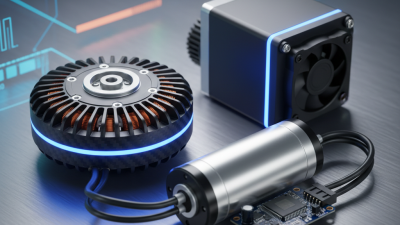
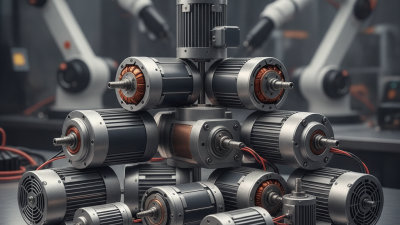
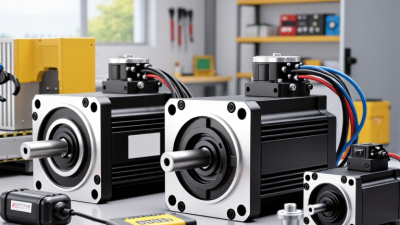
Brushless Direct Current Motor technology is reshaping motion control across factories, electric vehicles, robotics, appliances, and medical equipment. Its electronic commutation removes mechanical brushes, reducing wear and supporting quieter, more efficient operation. The International Energy Agency has reported that electric motor systems consume roughly half of global electricity. That figure explains why efficiency, service life, and intelligent control now influence purchasing decisions.
China remains a major manufacturing base for motors, drives, and precision components. Industry research from Grand View Research and MarketsandMarkets identifies Asia-Pacific as the leading region for brushless motor demand, supported by industrial automation, consumer electronics, and vehicle electrification. Their forecasts differ in market size and growth rate. That difference matters. Market reports use different product definitions, currencies, and forecast periods.
This article introduces ten leading Chinese suppliers of Brushless Direct Current Motor products. The comparison considers manufacturing experience, winding and magnet technology, controller compatibility, customization capability, quality systems, export reach, and after-sales support. Public certifications, product catalogues, factory information, and customer-facing technical evidence will guide the discussion. A strong supplier should explain torque curves, thermal limits, bearing choices, and IP ratings clearly—not only display attractive samples.
The ranking is not absolute. Buyer priorities vary.
A compact motor for a camera gimbal needs different evidence than a high-torque unit for an automated conveyor. Some suppliers publish detailed test data; others leave important specifications unclear. That weakness deserves attention. Readers should verify samples, datasheets, compliance documents, and production consistency before signing a contract. The goal is practical comparison, not promotional praise.
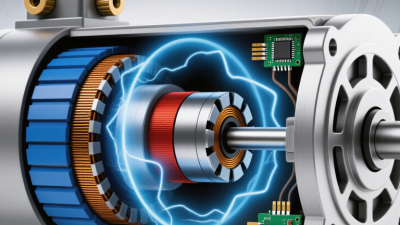
A brushless DC motor uses electronic commutation instead of mechanical brushes. Permanent magnets sit on the rotor, while stator windings create controlled magnetic fields. This design reduces brush wear, electrical noise, and routine maintenance. Many models use Hall sensors for accurate positioning. Sensorless versions can simplify construction, but starting performance may vary under heavy loads.
Supplier selection matters because motor performance depends on more than rated speed and torque. Experienced suppliers should explain winding choices, magnet grades, thermal limits, and controller compatibility. Ask for measured efficiency, vibration data, noise readings, and endurance-test records. A factory sample should match the final production design. It should not be a special sample. That mistake happens. Reliable suppliers also maintain traceable inspections for shaft dimensions, insulation strength, balancing, and temperature rise. Their technical answers should be clear, specific, and supported by test evidence.
Tips: Request three samples from one production batch. Compare current, speed, noise, and temperature after the same load cycle. Check whether testing uses your real voltage and duty pattern. Review factory capacity, process controls, and after-sales response before signing an order. A low quotation may hide weaker magnets, thinner wire, or limited testing. I would also leave room for honest uncertainty. Real machines face dust, heat, start-stop cycles, and installation errors. A supplier willing to discuss these weaknesses may deserve more trust than one promising perfect performance.
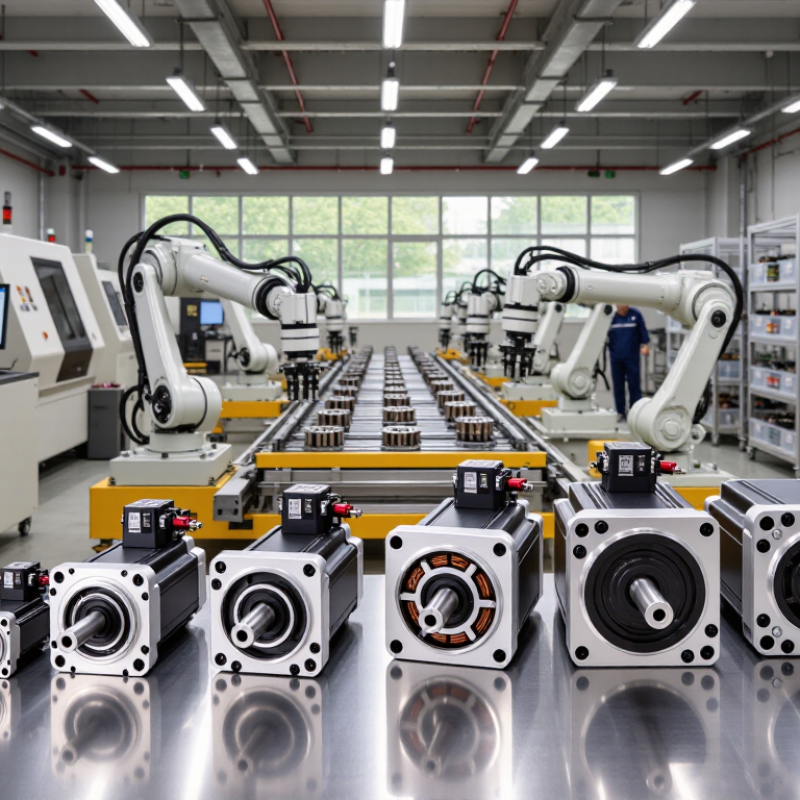
What Are the Top 10 Brushless DC Motor Suppliers in China?
China’s top ten BLDC motor suppliers should be evaluated beyond export volume. Demand is real. The China Association of Automobile Manufacturers reported over 12.8 million new-energy vehicles sold in China during 2024. The IEA’s Global EV Outlook 2025 also recorded more than 17 million electric-car sales worldwide. These figures show strong demand for compact, efficient, and reliable motor systems. However, market size does not prove supplier quality.
A professional evaluation should examine torque curves, thermal performance, vibration results, and efficiency at different loads. Suppliers should provide traceable test records, not only attractive catalog figures. ISO 9001 supports process control, while IEC 60034-based testing offers stronger technical evidence. Production capacity also matters. Review winding automation, rotor balancing, incoming-material inspection, and sample-to-mass-production consistency. Customization deserves attention too, especially controller matching, shaft tolerances, noise limits, and operating temperature. Delivery history and technical support reveal practical experience. A perfect ranking is impossible. Some public data remains incomplete.
Tips: Request three test reports, one production sample, and a clear warranty policy. Compare identical operating conditions. Check whether the supplier measures efficiency at your actual voltage and load. A low quoted price can hide weaker magnets, limited testing, or expensive redesign work. Small details often decide long-term reliability.
China’s brushless DC motor sector includes suppliers with different strengths, factory scales, and engineering habits. The profiles below reflect practical sourcing checks, including torque data, winding quality, testing records, and production consistency.
A high-volume coastal manufacturer focuses on compact motors for fans, pumps, and household equipment. Its strength is stable output, though customization may move slowly. A precision-oriented supplier builds motors for medical and laboratory devices, using careful balancing and low-noise testing. A smaller workshop serves robotics buyers with flexible shafts, connectors, and control options. It responds quickly, but capacity needs close verification. An industrial motor producer supports conveyors and automation systems with stronger housings and longer duty cycles. Its documentation is useful, yet sample reports should be checked against current production. A supplier specializing in cooling motors offers efficient designs for servers and energy equipment. Thermal results matter more than attractive catalog figures.
An automotive-focused factory supplies motors for pumps, actuators, and cabin systems. It usually follows strict process controls, but buyers should confirm testing standards for each project. An export-oriented manufacturer provides broad voltage ranges and multilingual technical files. Communication is convenient, although technical translation can still create gaps. A magnet and rotor specialist supports custom electromagnetic designs. Its engineering input can reduce noise and vibration during early development. A contract manufacturer combines motor assembly with circuit-board integration. This simplifies purchasing, but software responsibilities must be clearly defined. A regional supplier serves agricultural and outdoor equipment with sealed motor designs. Water resistance claims require independent inspection.
The tenth profile is a research-driven supplier developing high-efficiency motors and sensor feedback systems. It may offer strong prototypes, but production readiness requires patient auditing. Across all ten profiles, buyers should request samples, endurance curves, material details, and traceable inspection records. Some suppliers look excellent on paper. Factory visits can reveal the difference. My own sourcing experience suggests that price often hides testing limits, especially when specifications remain vague.
China’s top ten brushless DC motor suppliers differ less by catalog size than by engineering depth. Some focus on miniature motors for pumps, fans, and medical instruments. Others build larger units for automation, electric mobility, and industrial cooling. Product range matters. Yet voltage, torque, noise, and duty-cycle data reveal more than glossy catalogs. A serious buyer should request tested curves at the exact operating point. This step exposes weak documentation quickly.
The leading suppliers usually combine winding, magnet assembly, balancing, and end-of-line testing in one facility. That integration can shorten lead times and reduce variation between batches. Several suppliers offer custom shafts, connectors, encoders, and controller matching. Their capabilities differ in rotor balancing, thermal design, waterproofing, and low-noise optimization. Suppliers with in-house tooling respond faster when a housing needs revision. However, a large factory is not automatically a better engineering partner. Sample reports, failure analysis, and traceable process records deserve more weight.
From a procurement perspective, compare prototypes, monthly capacity, minimum order quantities, and after-sales response. Ask whether production tests include vibration, temperature rise, stall protection, and endurance cycling. Reliable suppliers explain limits instead of promising every specification. That honesty matters. My comparison remains imperfect because public data can omit subcontracted processes. An on-site audit or independent sample test may change the ranking. Cost should be measured beside efficiency, noise, replacement risk, and expected service life.
| Rank | Supplier Profile | Typical Product Focus | Common Rated Power Range | Typical Voltage Range | Motor Sizes | Integrated Capabilities | Customization Strength | Quality and Compliance | Typical Application Markets | Export Readiness |
|---|---|---|---|---|---|---|---|---|---|---|
| 1 | Supplier A Large-scale industrial manufacturer |
BLDC motors PMSM motors Geared motors Servo-compatible motors | 50 W–30 kW | 12–800 VDC | 42–180 mm frame diameter | Magnet production, winding, rotor balancing, controller matching, automated assembly, end-of-line testing | Very strong; custom windings, shafts, connectors, feedback devices, housings and firmware interfaces | ISO 9001; RoHS and REACH support commonly available; application-specific certification available by project | Industrial automation, AGV/AMR systems, pumps, fans, medical equipment and robotics | Strong; regular export packaging, multilingual technical documentation and distributor support |
| 2 | Supplier B High-volume appliance and equipment producer |
External-rotor BLDC Fan motors EC motors Pump motors | 10 W–5 kW | 12–480 VDC | 35–150 mm frame diameter | Die casting, plastic injection molding, automated winding, balancing, noise testing and motor-controller integration | Strong; optimized for OEM designs with defined airflow, noise, efficiency and mounting requirements | ISO 9001; common support for CE, RoHS, REACH and UL-related documentation | HVAC, refrigeration, air purifiers, ventilation, household appliances and commercial fans | Strong; experienced with container shipments and recurring OEM programs |
| 3 | Supplier C Precision motion-control specialist |
Low-inertia BLDC Servo motors Encoder motors Frameless motors | 20 W–10 kW | 24–750 VDC | 20–130 mm frame diameter | Electromagnetic design, encoder integration, dynamic balancing, rotor machining, drive tuning and performance mapping | Very strong; suitable for high-speed, low-cogging, low-noise and compact motion applications | ISO 9001; traceability and test reports typically available; export compliance documentation supported | Robotics, semiconductor equipment, CNC machinery, laboratory equipment and packaging systems | Strong; engineering support for overseas machine builders |
| 4 | Supplier D Automotive and mobility-focused producer |
Traction BLDC EPS auxiliary motors Electric pump motors Cooling fan motors | 100 W–50 kW | 24–800 VDC | 45–220 mm frame diameter | Automotive-grade validation, rotor balancing, thermal testing, environmental testing and controller coordination | Strong; designed around thermal, vibration, ingress-protection and duty-cycle requirements | Automotive quality systems and project-specific compliance available; certification scope depends on the program | Electric vehicles, battery systems, thermal management, mobility equipment and industrial vehicles | Strong; established quality documentation and supply-chain procedures |
| 5 | Supplier E Compact motor and micro-drive manufacturer |
Micro BLDC motors Coreless motors Gear motors Pump drives | 1 W–500 W | 3–48 VDC | 8–60 mm frame diameter | Micro winding, precision assembly, gear reduction, commutation testing and compact connector integration | Very strong; practical for compact medical, consumer and portable-device designs | ISO 9001; RoHS and REACH documentation commonly available; product-specific test reports supported | Medical devices, beauty equipment, office machines, cameras, valves and small pumps | Strong; flexible MOQ options and sample-development support |
| 6 | Supplier F Industrial fan and pump motor supplier |
EC fan motors Centrifugal fan motors Pump motors Outdoor-rated motors | 30 W–15 kW | 24–600 VDC | 50–200 mm frame diameter | Airflow testing, hydraulic testing, impeller matching, controller programming, balancing and environmental testing | Strong; focused on efficiency curves, acoustic performance, airflow and long-duty operation | ISO 9001; CE, RoHS and REACH support commonly available; IP testing available by model | HVAC, data-center cooling, refrigeration, water treatment and industrial ventilation | Strong; mature export logistics and project-based technical support |
| 7 | Supplier G Cost-competitive OEM/ODM manufacturer |
Standard BLDC motors Geared motors Actuator motors Custom assemblies | 10 W–8 kW | 12–400 VDC | 28–160 mm frame diameter | In-house machining, winding, assembly, basic controller matching and batch inspection | Strong; economical customization for shafts, mounting patterns, cables, sensors and gear ratios | ISO 9001; standard RoHS, REACH and CE documentation generally available | Conveyors, textile equipment, office equipment, small automation systems and appliances | Good; suitable for private-label and repeat-production orders |
| 8 | Supplier H High-speed motor specialist |
High-speed BLDC Spindle motors Air-bearing-compatible motors High-frequency drives | 100 W–20 kW | 48–800 VDC | 30–150 mm frame diameter | High-speed rotor design, precision balancing, thermal analysis, inverter matching and overspeed testing | Very strong; suitable for high RPM, compact packaging and demanding thermal conditions | ISO 9001; detailed performance and balancing reports available for qualified projects | Machine tools, compressors, dental equipment, laboratory systems and industrial automation | Good; mainly project-oriented export support |
| 9 | Supplier I Waterproof and outdoor motor manufacturer |
Sealed BLDC motors Underwater motors Actuator motors Low-voltage traction motors | 50 W–12 kW | 12–400 VDC | 40–180 mm frame diameter | Sealing design, corrosion-resistant materials, pressure testing, thermal cycling and cable/connector integration | Strong; adaptable to IP-rated, marine, agricultural and outdoor operating environments | ISO 9001; RoHS and REACH support; IP and environmental testing available according to product requirements | Marine equipment, agricultural machinery, outdoor automation, robotics and electric mobility | Good; experienced with customized export orders |
| 10 | Supplier J Small-batch engineering and prototyping supplier |
Prototype BLDC motors Custom stators Integrated motor modules Low-volume OEM products | 5 W–5 kW | 12–400 VDC | 20–140 mm frame diameter | Rapid prototyping, electromagnetic simulation, CNC machining, 3D-printed fixtures, winding and functional testing | Very strong; particularly suitable for new designs, pilot production and specialized operating conditions | ISO 9001 or equivalent quality controls may apply by facility; compliance documents are project-dependent | Research equipment, drones, robotics, smart devices, customized machinery and startup projects | Good; flexible communication and low-volume international orders |
Choosing a Chinese BLDC motor supplier requires more than comparing unit prices. MarketsandMarkets reported that the global BLDC motor market could grow from about USD 21.2 billion in 2023 to USD 31.6 billion by 2028. This expansion increases supplier choices, but also increases quality differences.
Check whether the supplier understands your actual load profile. Request speed-torque curves, thermal-rise results, noise data, and efficiency tests from production samples. A capable factory should explain magnet grades, winding methods, bearing life, and controller compatibility. Ask for batch traceability and calibration records. ISO 9001 certification helps, but it does not replace an on-site audit. Review the factory’s equipment, operator training, incoming inspection, and final testing. IEC 60034-based testing can improve technical consistency. Supplier quality reports should match your motor’s working conditions, not only laboratory settings.
Tips: Send a detailed test specification. Include voltage range, duty cycle, ambient temperature, shaft load, noise limits, and expected service life. Request three samples from different batches. Small details matter.
Cost deserves careful judgment. A cheaper motor may use weaker magnets, thinner insulation, or less reliable bearings. The problem may appear after installation. Suppliers sometimes provide ideal curves rather than average production data. That deserves a second question. I would also compare communication speed, engineering support, tooling ownership, and response during corrective actions. No checklist is perfect. A trial order can reveal more than a polished presentation. (Sources: MarketsandMarkets, BLDC Motor Market, 2023; IEC 60034 series.)
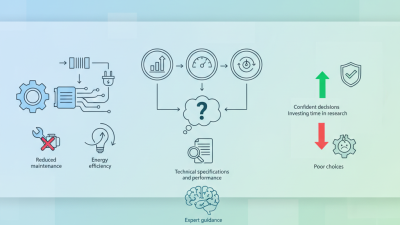
Recommended procurement weighting for comparing suppliers without relying on brand names
The evaluation model prioritizes motor performance and application fit, followed by quality assurance, customization capability, compliance documentation, delivery reliability, and total cost. Buyers should validate each category with datasheets, sample testing, inspection records, and production references.