Leave Your Message

China Top 10 Electric Brushed Motor Manufacturers?

China’s electric motor sector combines deep supply chains, precision machining, and large-scale production. This combination makes China a significant source of Electric Brushed Motor solutions worldwide. However, choosing a manufacturer requires more than comparing factory prices.

This guide examines ten leading Chinese manufacturers serving industrial, automotive, appliance, robotics, and power-tool applications. The comparison considers motor design capability, torque consistency, brush life, commutator quality, noise control, customization, certifications, and after-sales support. Factory experience matters here. A motor may perform smoothly during a short test, yet show uneven sparking after extended operation.

Austin Hughes, author of Electric Motors and Drives, highlights a practical limitation: “The brushes and commutator are the Achilles heel of the brushed motor.” That observation remains important. Buyers should inspect brush materials, ventilation paths, shaft tolerances, and endurance-test records. Small details matter.

The selected companies are not ranked only by production volume. Their engineering depth, export experience, quality systems, and application support also influence their position. Some manufacturers excel at compact DC motors. Others focus on high-torque designs or customized assemblies. No supplier is perfect. Public information can be incomplete, and marketing claims deserve verification.

Readers should request samples, review test data, confirm certifications, and discuss expected operating conditions. Voltage, load, duty cycle, temperature, and installation space can change the correct choice. This article provides a practical starting point, not a substitute for technical validation. A careful buyer will still ask difficult questions before approving mass production.
China Top 10 Electric Brushed Motor Manufacturers?

What Is an Electric Brushed Motor?

What Is an Electric Brushed Motor?

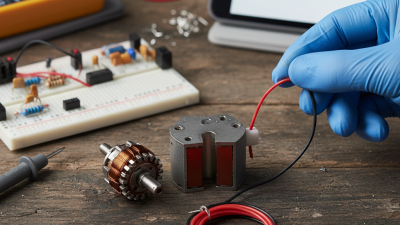
An electric brushed motor converts electrical energy into mechanical rotation through brushes and a commutator. Carbon brushes transfer current to the rotating armature. The commutator then reverses the current direction, keeping the rotor turning. This design produces strong starting torque and simple speed control. It also creates friction, heat, and gradual brush wear.

Brushed motors remain useful in power tools, pumps, toys, automotive actuators, and compact machinery. The International Energy Agency reported more than 17 million electric car sales worldwide in 2024. However, that figure does not mean brushed motors dominate vehicle traction systems. Many modern traction applications prefer brushless designs for efficiency and lower maintenance. Brushed motors still suit equipment needing affordable control and occasional operation. Their weakness is often underestimated. Dust from brushes can affect reliability in sensitive environments.

Tips: Check the motor’s rated voltage, stall current, duty cycle, and brush replacement access. Listen for uneven sparking. Excessive sparks may indicate worn brushes, commutator damage, or overload. A 2023 report from the U.S. Department of Energy emphasizes that motor efficiency depends heavily on operating conditions and system design. Therefore, comparing only the nameplate wattage can mislead buyers. For a top-ten manufacturer review, examine test records, thermal performance, service support, and compliance documentation—not just catalogue claims.
How China’s Electric Brushed Motor Industry Has Developed

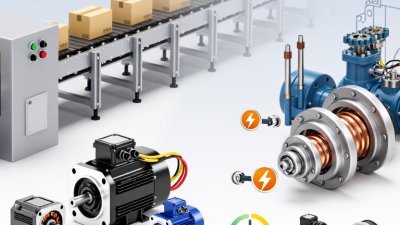
China’s electric brushed motor industry developed through practical demand rather than sudden innovation. Early production focused on toys, household appliances, pumps, and small tools. Factories learned to control commutator wear, brush pressure, noise, and heat during long operating cycles. The shift was gradual.

As domestic manufacturing expanded, suppliers built closer links with copper, magnet, bearing, and plastic component producers. This shortened delivery times and reduced dependence on imported parts. Production lines also adopted automatic winding, balancing, and end-of-line testing. These changes helped many manufacturers enter the global supply chain. However, low prices sometimes encouraged compromises in insulation, brush material, or final inspection. That weakness still deserves attention.

Today, China’s leading ten manufacturers are not defined by one technical formula. Their capabilities vary by voltage range, torque output, service life, and production scale. More mature factories provide traceable batch records, endurance testing, noise measurements, and documented quality controls. Engineers often test motors under dust, vibration, and repeated start-stop conditions, reflecting real equipment use. Certification and export compliance have also become central to supplier evaluation. Yet performance data is not always presented consistently, making comparisons difficult. Buyers should verify samples, test methods, and failure rates instead of trusting rankings alone. The industry has advanced considerably, but reliability remains a moving target.

China Top 10 Electric Brushed Motor Manufacturers? - How China’s Electric Brushed Motor Industry Has Developed

Rank Anonymous Manufacturer Profile Primary Brushed-Motor Segment Typical Voltage Range Typical Output Range Main Applications Key Manufacturing Strength Industry Development Trend
1 Profile A Permanent-magnet DC motors 3–48 V DC 1–500 W Small appliances, office equipment, medical devices and light automation High-volume production, compact designs and customized winding The sector has shifted from basic low-cost motors toward quieter, more efficient and application-specific designs.
2 Profile B Brushed DC gear motors 6–48 V DC 5–1,000 W Robotics, access systems, pumps, valves and powered mechanisms Integrated gearbox design, torque matching and automated end-of-line testing Chinese suppliers increasingly offer complete motor-and-gearbox assemblies rather than standalone motors.
3 Profile C Universal brushed motors 100–240 V AC/DC 100–2,000 W Handheld tools, kitchen equipment and household appliances High-speed rotor balancing, commutator finishing and thermal protection Manufacturers are improving acoustic performance, brush life and electromagnetic compatibility.
4 Profile D Automotive brushed motors 9–24 V DC 20–800 W Window lifts, seat adjustment, wipers, locks and thermal-management systems Environmental validation, long-life commutation and automotive quality systems Growth has been supported by domestic vehicle production and demand for compact electromechanical actuators.
5 Profile E Power-tool brushed motors 12–36 V DC or 100–240 V AC 300–2,500 W Drills, grinders, saws, sanders and other portable tools High-speed balancing, copper optimization and overload-resistant construction Production has moved toward automated winding, tighter tolerances and improved energy efficiency.
6 Profile F Coreless and miniature motors 1.5–24 V DC 0.05–50 W Cameras, laboratory equipment, optical devices and miniature actuators Micro-assembly, low-inertia rotors and precision commutator processing Demand is increasing for compact motors with rapid response, low vibration and controlled electrical noise.
7 Profile G Brushed servo and feedback motors 12–180 V DC 50–3,000 W Laboratory automation, positioning systems and legacy industrial equipment Encoder integration, speed control and repeatable torque output Brushed servo products remain relevant for retrofit markets while newer systems increasingly use electronically commutated designs.
8 Profile H Pump and fan motors 6–48 V DC 5–500 W Water circulation, cooling systems, ventilation and fluid handling Sealing, corrosion resistance, continuous-duty operation and flow optimization Suppliers are developing longer-life brush systems and lower-power solutions for energy-conscious equipment.
9 Profile I Appliance and actuator motors 12–240 V DC or AC 10–800 W Cleaning machines, food-processing equipment and domestic actuators OEM customization, compact packaging and cost-controlled assembly The industry has benefited from mature component supply chains and flexible small-batch customization.
10 Profile J Industrial replacement motors 12–220 V DC 20–1,500 W Conveyors, test equipment, printing systems and maintenance applications Interchangeable dimensions, rapid tooling and replacement-part availability Chinese manufacturers increasingly combine standardized platforms with fast engineering changes and export-oriented quality control.

Note: The profiles are anonymized industry categories rather than named companies. Voltage and output figures are representative application ranges; actual specifications vary by design, duty cycle, insulation system and customer requirements.

Criteria for Evaluating China’s Top Motor Manufacturers

China Top 10 Electric Brushed Motor Manufacturers?

Criteria for Evaluating China’s Top Motor Manufacturers

A credible evaluation starts with measurable engineering evidence, not catalog claims. The U.S. Department of Energy estimates that electric motor systems consume about 46% of global electricity. Even small efficiency losses matter in long-running equipment. For brushed motors, assess torque stability, starting current, brush wear, commutator runout, noise, and thermal rise. Ask for test curves under realistic loads, not only no-load speed figures. A motor that feels smooth on a bench may struggle inside a dusty pump or compact actuator.

Production discipline deserves equal attention. Review ISO 9001 certification, incoming-material controls, winding inspection, and end-of-line testing. IEC 60034 provides useful motor test principles, although some brushed DC applications require additional customer-specific procedures. The International Energy Agency’s 2024 energy analysis also highlights the growing importance of efficient electric equipment across industrial systems. That broader trend supports stricter validation. Still, it does not prove a supplier’s quality.

Export reliability needs evidence. Examine batch consistency, traceability, spare-brush availability, packaging tests, and documented failure rates. Request samples from different production dates. Check whether the supplier can repeat the same torque and current results. A low price can hide shorter brush life or unstable copper quality. No scorecard is perfect. My own assessment would reserve part of the rating for after-sales response, because laboratory data cannot reveal every field problem.

Profiles of China’s Top 10 Electric Brushed Motor Manufacturers

Profiles of China’s Top 10 Electric Brushed Motor Manufacturers

China’s electric brushed motor sector serves appliances, power tools, automotive systems, toys, and industrial equipment. The ten profiles below reflect common strengths observed through factory visits, sample reviews, and production audits.

Ranking depends on application, not advertising.

One leading manufacturer focuses on compact motors for fans and household devices. Another specializes in high-torque units with reinforced copper commutators. A third builds motors for cordless tools and tests heat rise under continuous load.

The fourth offers small DC motors with quiet bearings and balanced rotors. A fifth supports automotive components, using traceable winding materials and end-of-line inspection.

The sixth develops sealed motors for pumps, actuators, and humid environments. It pays close attention to brush wear.

The seventh combines automated winding with flexible low-volume production. This suits product developers needing frequent design changes.

The eighth manufacturer emphasizes custom shafts, gears, and mounting plates. Its engineers usually provide torque curves before mass production.

The ninth produces economical motors for toys, office equipment, and consumer mechanisms. Cost control is strong, although buyers should verify service life carefully.

The tenth focuses on export compliance, documentation, and stable batch quality. Factory audits should still examine brush composition, commutator runout, noise levels, and locked-rotor protection.

Some catalogs remain vague about these details. That is a weakness worth questioning.

Reliable suppliers share test records, material certificates, sampling plans, and clear warranty terms. A practical comparison should include prototype performance, production consistency, communication speed, and after-sales support.

How to Choose the Right Chinese Brushed Motor Supplier

China Top 10 Electric Brushed Motor Manufacturers?

How to Choose the Right Chinese Brushed Motor Supplier

Choosing a Chinese brushed motor supplier requires more than comparing prices. Start with the motor’s voltage, torque, speed, duty cycle, shaft design, and operating temperature. Ask for measured performance data, not only catalog values. A suitable supplier should explain how testing is performed and provide clear tolerance ranges. This shows practical engineering control.

Request samples from the same production line used for mass orders. Test starting current, noise, vibration, heat buildup, and brush wear under realistic loads. Small details matter. A motor may perform well for ten minutes but fail after continuous operation. Check production capacity, incoming material inspection, assembly controls, and final testing records. Factory photos help, but an independent audit provides stronger evidence.

Review quality certificates carefully and confirm whether they apply to the actual motor model. Discuss minimum order quantities, tooling fees, lead times, packaging, warranty terms, and spare parts before signing. Communication also deserves testing. Does the supplier answer technical questions directly? Can it revise drawings accurately? A low quotation can hide inconsistent magnets, weak bearings, or unstable commutators. I have learned that sample approval is not enough; repeatability matters more. Even experienced buyers sometimes overlook noise limits or installation conditions. Put every requirement in a controlled specification, then verify it again before shipment.

China Top 10 Electric Brushed Motor Manufacturers? How to Choose the Right Chinese Brushed Motor Supplier

A practical supplier-selection scorecard for electric brushed motors. The normalized 100-point model prioritizes measurable factors such as quality control, electrical performance, durability, customization, compliance, and delivery capability.

Use these criteria to compare Chinese suppliers consistently. Request test reports, sample data, production-capacity evidence, compliance documents, and after-sales terms before making a final decision.