Top Tips for Effective Application of DC Motors?
The application of DC motors spans various industries, from automotive to robotics. Renowned expert Dr. Jane Smith, a mechanical engineer with over 20 years of experience, emphasizes their importance: "DC motors are the backbone of precision control in modern machinery." This statement highlights the critical role these motors play in enhancing efficiency and performance across different sectors.
In recent years, the application of DC motors has evolved. They've become essential in producing precise movements in robotic limbs and automating processes in manufacturing. However, challenges remain. Understanding the specific needs of each application is crucial. For instance, the right motor selection impacts speed and torque requirements significantly.
With advancements in technology, the potential for innovative applications continues to grow. Yet, many still grapple with integrating DC motors into new systems. Optimizing their use requires careful consideration of factors like power supply and mechanical design. As industries adapt, ongoing dialogue about the application of DC motors will promote better practices and drive future innovations.
Understanding the Basics of DC Motors: Principles and Types
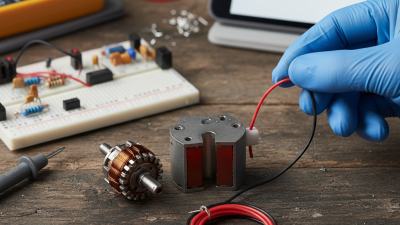
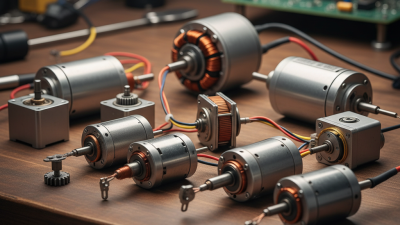
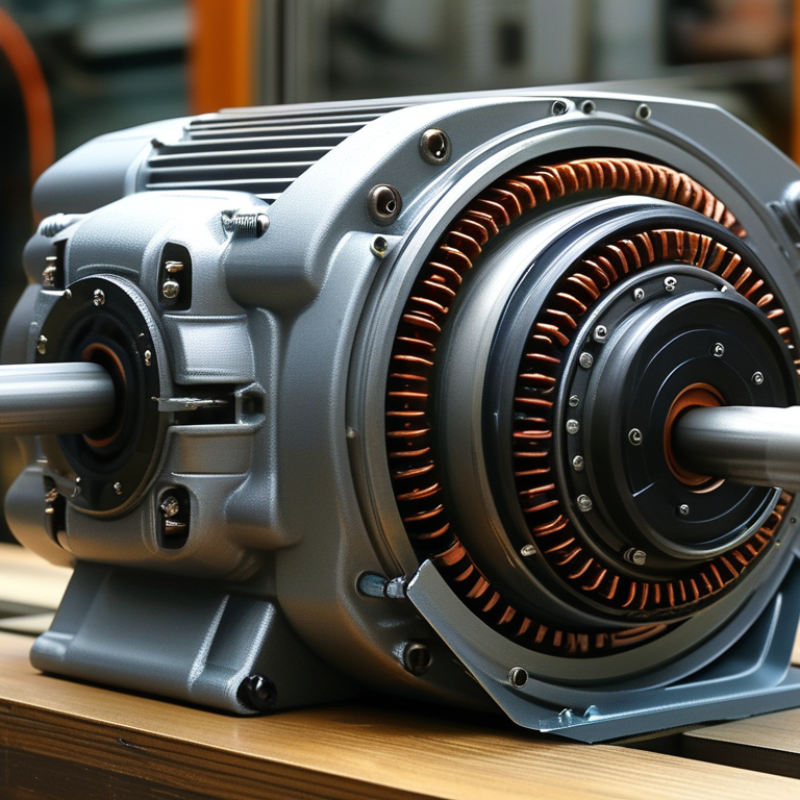
DC motors are essential components in various applications, ranging from household appliances to industrial machines. Understanding their principles and types is crucial for effective use. A DC motor converts electrical energy into mechanical energy through the interaction of magnetic fields. There are two main types: brushed and brushless. Brushed motors are simpler but require maintenance, while brushless motors offer efficiency and longevity, making them suitable for demanding tasks.
When applying DC motors, consider the load specifications. Match the motor's torque and speed to your project's needs. Overloading a motor can lead to overheating and failure. It’s also vital to implement proper cooling mechanisms. Adequate ventilation ensures that the motor operates within a safe temperature range.
Another tip is to control the motor's power supply effectively. Using pulse-width modulation (PWM) can adjust speed without losing torque. This method improves efficiency and extends the motor's life. Always test under varying conditions to observe performance. Document any inconsistencies. Understanding these principles helps in troubleshooting issues later.
Key Parameters Influencing DC Motor Performance: Torque, Speed, and Power
When considering the performance of DC motors, three key parameters stand out: torque, speed, and power. Torque affects how much load a motor can handle. Higher torque allows a motor to start moving heavier objects. However, increasing torque often requires more power, which can lead to overheating issues. Always monitor temperature levels during long operations.
Speed is crucial as well. It determines how quickly a motor can perform its tasks. A motor’s speed might vary under different loads. Too much load can reduce speed, which affects system efficiency. Balancing load and speed is a challenge in design.
Power is the final piece of the puzzle. It is the product of torque and speed. Understanding the relationship between these elements is essential for optimal performance. Unsuitable power ratings can lead to motor failure. Always ensure appropriate power supply during operation. Regular testing and monitoring can reveal performance issues before they escalate. Employing sensors might help track these metrics effectively.
Torque, Speed, and Power of DC Motors
Selecting the Right DC Motor for Your Application: Load and Duty Cycle Analysis
Choosing the right DC motor is crucial for achieving optimal performance in various applications. Understanding your load requirements is the first step. Evaluate the torque needed for your application. High torque may require a larger motor, while low torque needs a smaller one. Analyze the load characteristics, such as whether it is constant or varies over time. This analysis will help you avoid under-sizing or over-sizing the motor.
The duty cycle is another essential factor when selecting a DC motor. It determines how long your motor will run versus how long it will rest. Some applications require continuous operation, demanding a motor designed for high duty cycles. Others, like intermittent operations, can afford lower duty cycles. Think about the implications of a wrong selection. A motor running beyond its duty cycle can overheat and fail prematurely. It's crucial to balance load and duty cycle for long-term reliability.
Optimizing DC Motor Control: Techniques for Efficiency and Precision
DC motors play a crucial role in various industrial applications. Optimizing control techniques enhances their efficiency and precision. According to a recent study by the International Electromechanical Commission, improved control methods can increase motor efficiency by up to 15%. Such enhancements not only save energy but also reduce operational costs.
Precision is vital in applications such as robotics and conveyor systems. Using pulse width modulation (PWM) can regulate voltage and current, allowing for smooth operation. In fact, research indicates that PWM can improve torque performance by 20% in specific scenarios. However, it is essential to monitor heat generation. Excessive temperatures can lead to component failures and decreased lifespan.
Another technique involves employing feedback systems. Closed-loop control can ensure the motor operates within desired parameters. Yet, this approach requires careful calibration. Implementing a feedback mechanism may complicate the control system. Balancing simplicity and effectiveness can be challenging but necessary. Exploring these techniques can lead to significant advancements in DC motor applications.
Top Tips for Effective Application of DC Motors
| Tip No. |
Technique |
Description |
Efficiency Gain (%) |
| 1 |
PWM Control |
Using pulse-width modulation for speed regulation. |
20 |
| 2 |
Feedback Loop |
Implementing closed-loop feedback for accuracy. |
25 |
| 3 |
Optimal Gear Ratio |
Choosing the right gear ratio for torque and speed balance. |
15 |
| 4 |
Thermal Management |
Ensuring adequate cooling to prevent overheating. |
10 |
| 5 |
Maintenance Schedule |
Regular maintenance to ensure optimal performance. |
5 |
Maintaining DC Motors: Best Practices for Longevity and Reliability
DC motors are essential in many applications. To ensure these motors remain reliable and last longer, proper maintenance is crucial. Regularly checking for wear and tear can save you from unexpected failures. Over time, brushes and commutators can degrade, impacting performance. Inspect these components frequently to identify any signs of damage early.
Another common issue is overheating. Ensure your motor is within the operating temperature range. Dust and debris can accumulate in and around the motor, affecting airflow. Keep your motor clean to maintain optimal performance. Lubrication is equally important, but not all motors need the same type of lubricant. Using the wrong grease can lead to failures, so choose carefully.
Unexpected problems can disrupt operations. A proactive maintenance schedule can help. Record keeping is vital. Maintain logs of inspections, repairs, and replacements. Reflect on any issues that arise to improve your maintenance strategies. Recognizing patterns in failures can guide future actions. Don’t wait for issues to escalate; addressing them early can prevent costly downtime.