Application of DC Motors in Global Industries What You Need to Know
The Application Of DC Motors plays a vital role across various global industries. These motors are renowned for their efficiency and precision. In manufacturing, they power conveyor systems, enhancing productivity. The automotive sector also relies heavily on DC motors for electric vehicles, providing reliable performance.
Despite their advantages, the Application Of DC Motors requires careful consideration. Factors like voltage fluctuations can impact efficiency. Industries must weigh these risks against operational needs. Maintenance is essential to ensure the longevity of these motors.
Overall, the integration of DC motors in industries is a testament to their significance. Understanding their application can lead to better decision-making. Acknowledging both strengths and challenges is critical for sustainable growth.
Overview of DC Motors and Their Functionality
DC motors play a pivotal role in various industries, serving as vital components in numerous applications. These motors convert electrical energy into mechanical energy, allowing for precise control of speed and torque. In manufacturing, DC motors drive conveyor belts and robotic arms, enhancing productivity and efficiency. According to market reports, the global DC motor market is projected to reach $26.9 billion by 2026, driven by increasing automation needs.
In terms of functionality, DC motors are favored for their simple design and ease of control. They can be found in everything from consumer electronics to automotive systems. Their ability to provide high starting torque makes them suitable for heavy-duty applications. However, they do have a few drawbacks. Maintenance can be an issue due to brush wear and heat generation. Ensuring proper cooling and implementing advanced materials can alleviate some of these concerns.
Moreover, the wide variety of available motors raises the question of choice for specific applications. Not all DC motors are created equal. Understanding torque, speed requirements, and environmental conditions is crucial for optimal performance. Adequate research and informed decision-making are essential in navigating these complexities to leverage the full potential of DC motors in various operating environments.
Key Advantages of DC Motors in Industrial Applications
DC motors play a crucial role in various industrial applications. Their ability to provide precise speed control makes them a favorite in many sectors. Industries such as manufacturing, robotics, and automotive benefit significantly from DC motors. They enable smooth operation where precision is key.
One major advantage is their ease of control. Changing the speed and direction is straightforward, allowing for adaptability in dynamic environments. This flexibility is vital for applications requiring constant adjustments. Additionally, DC motors are often more compact than their AC counterparts. This compactness allows for easier integration into machinery with limited space.
However, reliance on DC motors is not without challenges. They can require more maintenance due to brush wear. This can lead to downtime, which is costly in fast-paced industries. There is also a risk of overheating if not properly managed. Despite these issues, understanding the advantages of DC motors is necessary for effective application. They remain a reliable choice in many industrial settings, blending efficiency with functionality.
Common Industries Utilizing DC Motors Globally
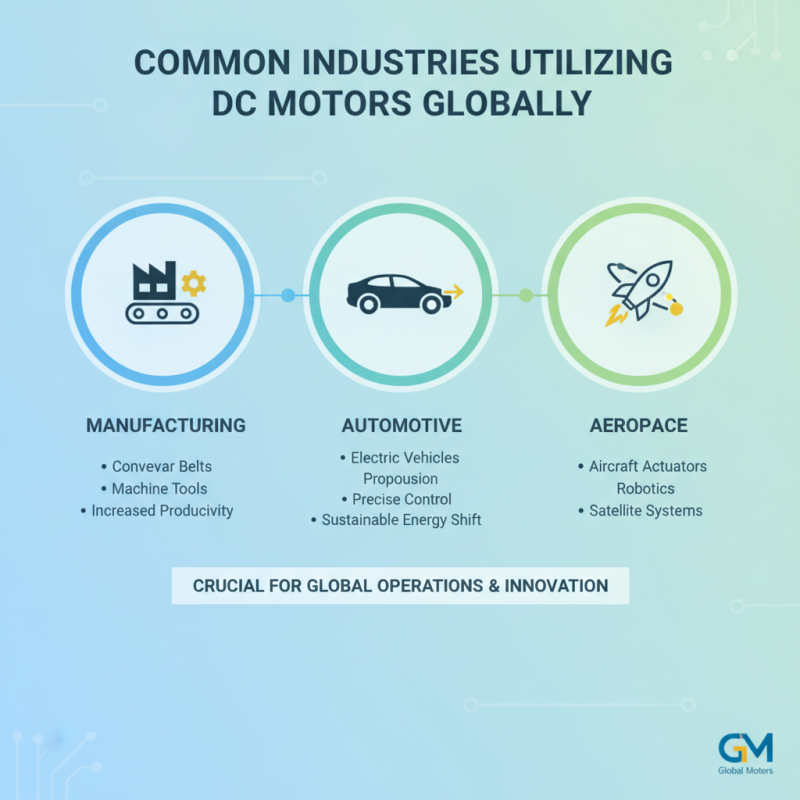
DC motors play a crucial role in various global industries. They are widely used in manufacturing, automotive, and aerospace sectors. In manufacturing, they drive conveyor belts and machine tools. This ensures smooth operations and increased productivity. Automotive applications include electric vehicles, where DC motors provide propulsion and precise control. These vehicles are becoming increasingly popular, highlighting the shift toward sustainable energy.
In the aerospace industry, DC motors are often utilized in control systems. They help in stabilizing aircraft and enabling automation in flight. However, there are challenges. Reliability is a key concern. The harsh environments can lead to failures if not properly managed. Engineers must consider these factors during design.
Other industries, such as robotics, also benefit from DC motors. They enable smooth movements in robotic arms and automated systems. This integration improves efficiency and precision. Yet, the technology requires constant improvement. Efficiency standards are evolving, pushing manufacturers to innovate. This growth reflects the dynamic nature of industries relying on DC motors.
Challenges and Limitations of DC Motor Usage
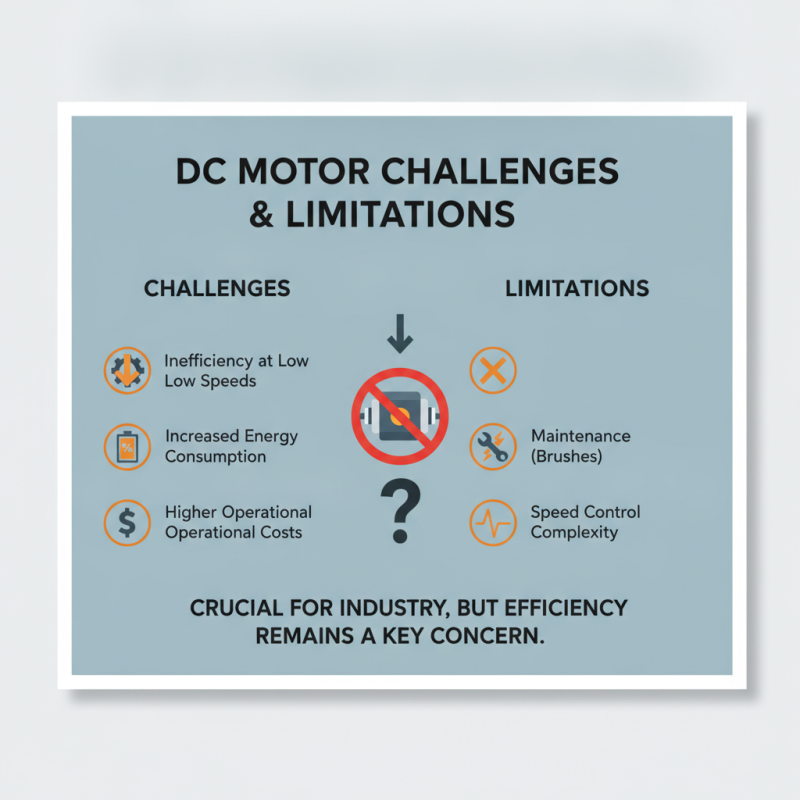
DC motors play a crucial role in various industrial applications. However, their usage comes with distinct challenges and limitations. One major concern is efficiency. DC motors can underperform at lower speeds, leading to increased energy consumption. This inefficiency can raise operational costs in large-scale systems.
Another issue is maintenance. DC motors have brushes that wear out over time. Regular maintenance is essential to ensure they function properly. Ignoring this can result in unexpected downtimes and costly repairs. Additionally, vibrations and heat can cause further wear, complicating reliability.
Environmental factors also pose limitations. DC motors can struggle in extreme conditions, such as high humidity or dust-laden environments. This can affect their performance and lifespan. Companies must consider these factors when integrating DC motors. Ultimately, while DC motors offer advantages, manufacturers must navigate these challenges to optimize their functionality in diverse applications.
Future Trends in DC Motors and Industrial Automation
The future of DC motors in industrial automation is promising yet complex. Industry reports indicate a projected CAGR of 7.5% in DC motor use by 2027. This growth is tied to the increasing demand for energy-efficient solutions. Industries are looking for systems that not only optimize performance but also reduce costs.
However, challenges exist. Integrating DC motors with advanced automation requires careful planning. The adaptation of motors to smart technologies can create compatibility issues. Moreover, a study highlighted that nearly 30% of companies face difficulties in training staff on new systems. This gap must be addressed to fully leverage DC motor advancements.
Emerging trends include the shift toward renewable energy sources. DC motors can play a crucial role in sustainable practices. The electric vehicle market, for instance, is expected to demand more DC motors. With this anticipated growth, industries need robust strategies to navigate potential hurdles.