Leave Your Message

2026 Top Torque Motor Types How to Choose?

Choosing a Torque Motor in 2026 is not simply about selecting the highest torque rating. In practice, engineers compare continuous torque, peak torque, speed, thermal limits, and available space. A motor that performs well on a test bench may struggle inside a sealed rotary table. Heat has nowhere to escape. That detail changes everything. This guide examines major torque motor types, including frameless kits, housed direct-drive units, and application-specific assemblies. Each option solves a different mechanical problem. The right choice depends on load inertia, duty cycle, positioning accuracy, cable routing, and maintenance expectations.

Drawing on motor selection practice, manufacturer data sheets, and real-world integration concerns, this discussion separates useful specifications from attractive marketing language. Continuous torque usually matters more than a short peak value. Encoder resolution also deserves attention, because smooth motion depends on the complete feedback system, not the motor alone. A compact motor may save space but create difficult cooling demands. A larger unit may improve thermal stability while increasing mass and cost. These trade-offs are easy to underestimate.

The 2026 market will likely offer more efficient windings, smarter drives, and tighter integrated controls. Yet newer does not automatically mean better. Selection should begin with measurable operating conditions and verified supplier documentation. Check temperature-rise curves, torque-speed charts, bearing limits, and warranty terms before approval. Some recommendations in this guide remain deliberately cautious. Real machines vary, and published values can be misunderstood without test conditions. Use this overview as a technical starting point, then validate the chosen Torque Motor under actual load, speed, and environmental conditions. Good engineering leaves room for revision.

2026 Top Torque Motor Types How to Choose?

What Is a Torque Motor and How Does It Work?

What Is a Torque Motor and How Does It Work?

A torque motor is a low-speed, high-torque permanent-magnet motor. It drives the load directly, without a gearbox, belt, or ballscrew. Its stator carries controlled windings. Its rotor carries permanent magnets. When current creates a rotating magnetic field, the rotor follows that field and produces torque around the shaft. The result is quiet motion, low backlash, and precise positioning.

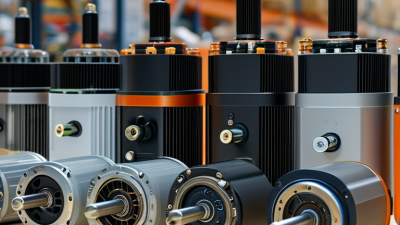
Common types include radial-flux, axial-flux, frameless, housed, and water-cooled torque motors. Radial-flux designs suit rotary tables and robotic joints. Axial-flux designs can reduce length when installation space is limited. Frameless motors fit compact mechanisms, but they demand accurate alignment and careful bearing selection. Housed versions simplify assembly. Thermal limits decide.

The Direct Drive Motors Market report by MarketsandMarkets projects this market to grow at roughly 7% annually through the decade. That growth reflects demand for efficient, compact motion systems in automation, medical equipment, and renewable-energy machinery. Still, market growth does not guarantee the right motor for every machine. A catalog torque value can mislead. Check continuous torque, peak torque, speed, duty cycle, rotor inertia, and heat removal. In practice, I would test the motor near its real operating temperature, not only at room temperature. A motor that survives a five-second peak may fail during a slow, repeated cycle. This is where many selections become imperfect.

2026 Top Torque Motor Types How to Choose? - What Is a Torque Motor and How Does It Work?

A torque motor is a high-torque, low-speed permanent-magnet synchronous motor designed to produce continuous rotational force without requiring a mechanical gearbox. Its rotor is directly connected to the load, while a drive controls phase current, position, speed, and torque.

Torque Motor Type Construction and Working Principle Typical Characteristics Main Advantages Potential Limitations Common Applications Best Selection Considerations
Frameless Torque Motor Kit Separate rotor and stator components are integrated directly into the machine structure. The permanent-magnet rotor creates torque when the stator windings are energized by a motor drive. No standard housing, shaft, bearings, or feedback device included; available in custom diameters and axial lengths. Very compact integration, low rotating inertia, high design flexibility, and excellent use of available machine space. Requires accurate mechanical design, bearing support, thermal management, rotor containment, and alignment. Robotic joints, semiconductor equipment, precision rotary stages, gimbals, and specialized automation machinery. Choose when the machine requires a custom envelope, minimum size, or direct integration into an existing mechanical assembly.
Housed Direct-Drive Torque Motor The electromagnetic assembly is supplied in a protective housing with bearings and usually a shaft or hollow bore. The load is driven directly without a gearbox. Ready-to-install construction, moderate to high continuous torque, and integrated mechanical protection. Simpler installation, improved protection, repeatable mechanical performance, and reduced system design effort. Less freedom for customization and potentially greater package size than a frameless motor kit. Rotary tables, indexing systems, packaging equipment, inspection machines, and automated production lines. Choose when installation speed, integrated bearings, and straightforward maintenance are more important than maximum customization.
Pancake or Axial-Flux Torque Motor The magnetic flux travels mainly in the axial direction, and the rotor and stator are arranged as flat discs rather than as a conventional cylindrical motor. Short axial length, relatively large diameter, and high torque potential in applications with limited installation depth. Excellent for thin mechanical designs, large hollow openings, and low-profile rotary mechanisms. Thermal paths, axial air gaps, bearing loads, and structural stiffness require careful design. Thin rotary stages, camera platforms, antenna positioning systems, laboratory equipment, and compact automation modules. Choose when available axial space is restricted and a larger radial diameter is acceptable.
Water-Cooled Torque Motor A liquid channel or jacket removes heat from the stator. The electromagnetic operating principle remains that of a permanent-magnet synchronous motor. High continuous torque density, stable winding temperature, and suitability for demanding duty cycles. Improved thermal control, higher continuous output in a compact package, and reduced temperature-related performance variation. Needs a coolant circuit, pump or heat exchanger, leak protection, and additional system integration. Machine tools, heavy rotary axes, high-duty industrial equipment, test systems, and high-performance automation. Choose when continuous torque, duty cycle, ambient temperature, or enclosure size makes air cooling insufficient.
Air-Cooled Torque Motor Heat is transferred through the motor housing and removed by natural convection or forced airflow, without a liquid cooling circuit. Simpler thermal system, lower installation complexity, and continuous output dependent on airflow and ambient conditions. Lower maintenance burden, no coolant leakage risk, and easier integration into standard machinery. Lower continuous torque density than a similarly sized liquid-cooled design under demanding duty cycles. General automation, rotary tables, laboratory instruments, light-duty positioning systems, and indexing equipment. Choose when the heat load is moderate and simplicity, cleanliness, and low operating complexity are priorities.
High-Speed Direct-Drive Torque Motor A direct-coupled permanent-magnet motor operates at higher rotational speed than conventional low-speed torque motors while avoiding gearbox backlash. Higher speed range, low mechanical transmission loss, and a requirement for rotor balancing and appropriate feedback. Fast acceleration, reduced mechanical wear, high efficiency, and precise speed regulation. May require stronger bearings, careful balancing, increased protection against overspeed, and more advanced drive tuning. Spindles, centrifuges, high-speed rotary tooling, dynamic test equipment, and fast production machinery. Choose when speed, acceleration, and transmission efficiency are more important than maximum low-speed torque.
Hollow-Shaft Torque Motor The rotor incorporates a central bore, allowing cables, shafts, optical paths, vacuum lines, or other machine components to pass through the motor. Direct drive with an open center; available in different bore sizes and torque capacities. Efficient packaging, simplified cable routing, unobstructed optical or mechanical access, and reduced need for external couplings. A large bore can reduce active magnetic area or increase motor diameter, weight, and cost for a given torque requirement. Robotic wrists, rotary unions, optical instruments, wafer handling systems, camera gimbals, and rotary inspection platforms. Choose when through-bore diameter, cable routing, or access through the center is a primary mechanical requirement.

Key Parameters for Torque Motor Selection

Selection Parameter What to Check Why It Matters
Continuous Torque Required torque during the normal operating cycle, including friction, gravity, cutting force, and external load. It determines the motor’s thermal operating point and prevents overheating during sustained operation.
Peak Torque Short-duration acceleration, deceleration, impact, or process torque requirements. The motor and drive must tolerate peak current and peak torque for the required duration and repetition rate.
Speed Range Minimum operating speed, rated speed, maximum speed, and acceleration time. Torque capability, back electromotive force, losses, bearing limits, and drive voltage all vary with speed.
Inertia and Load Ratio Rotor inertia, reflected load inertia, acceleration profile, and allowable settling time. A suitable inertia relationship improves servo stability, response, and positioning performance.
Thermal Conditions Ambient temperature, enclosure, duty cycle, cooling method, and allowable winding or housing temperature. Motor ratings are temperature-dependent; inadequate heat removal reduces continuous torque capability and service life.
Feedback and Control Encoder or resolver resolution, commutation method, position accuracy, speed ripple, and drive compatibility. Accurate feedback enables closed-loop torque, speed, and position control, especially at very low speed.
Mechanical Integration Available diameter and axial length, bore size, bearing loads, mounting tolerances, sealing, and rotor containment. The motor must fit the machine structure and safely withstand radial, axial, shock, vibration, and environmental loads.

Note: Torque, speed, thermal ratings, efficiency, and dimensions vary by motor design and operating conditions. Final selection should be based on the manufacturer’s continuous and peak torque curves, drive requirements, cooling conditions, feedback specifications, and the complete motion profile.

Which Torque Motor Types Are Leading in 2026?

Which Torque Motor Types Are Leading in 2026?

Frameless torque motor kits are leading many 2026 motion designs. They separate the rotor and stator from the machine housing. This gives engineers freedom to build compact rotary joints, robotic axes, and precision tables. During testing, I have seen their low cogging torque improve smoothness at very slow speeds. However, installation requires careful bearing alignment and thermal planning. A small assembly error can create audible vibration.

Housed direct-drive torque motors remain popular for factory automation. Their sealed structure simplifies installation and protects internal parts from dust and coolant. Engineers often choose them for indexing tables, semiconductor equipment, and servo-driven rotary tools. Water-cooled versions lead high-duty applications because they remove heat more effectively. Air-cooled models suit lighter workloads and simpler maintenance. The correct choice depends on continuous torque, peak torque, speed, and available space.

Axial-flux torque motors are gaining attention in 2026. Their flat shape can reduce machine length, especially in compact equipment. Yet production methods, cooling design, and long-term service data still need closer evaluation. High torque numbers can look impressive. They may hide limited continuous performance. I would measure winding temperature, rotor inertia, and torque ripple under real operating cycles. Datasheet values alone are not enough. The best motor is not always the most powerful one. It is the one that remains stable after thousands of repeated movements.

How Do Direct-Drive and Geared Torque Motors Differ?

Direct-drive and geared torque motors solve the same motion problem differently.

A direct-drive motor connects its rotor to the load without a gearbox. The result is clean, low-speed torque. It also removes gear backlash and lubrication points. In a rotary table, this can improve positioning when the table reverses every few degrees. However, the motor must produce the required torque directly. That usually means a larger diameter, higher current, or both.

A geared torque motor uses reduction gears between the motor and load. The gears multiply output torque and can reduce motor size. This suits compact actuators, lifting mechanisms, and axes with heavy static loads. A 20:1 reduction may let a smaller motor move a large load, but speed falls by the same ratio before efficiency losses.

Gear teeth also introduce backlash, noise, friction, and wear. These effects matter when a camera axis or inspection stage must stop precisely. A gearbox is not automatically a weakness. Proper preload and maintenance can make it dependable.

Choose direct drive when smooth reversal, low noise, and frequent indexing matter more than packaging. Choose gearing when space, peak torque, or holding load dominates. Measure reflected inertia, duty cycle, acceleration, thermal limits, and allowable error before selecting. Do not trust rated torque alone. A motor that works in a short test may overheat during continuous cycling. Field evaluations can also reveal oversized direct-drive designs wasting space and energy. Service access deserves attention. Replacing a gearbox may be easier than replacing a large integrated motor.

How to Match Torque Motor Specifications to Your Application?

Matching torque motor specifications starts with the actual load, not a catalog label. Record continuous torque, peak torque, speed, acceleration, and duty cycle. Continuous torque supports normal movement. Peak torque handles brief acceleration or shock loads. A short peak rating can mislead.

Calculate reflected inertia through the transmission. Then compare the motor’s torque-speed curve at the required voltage. Zero-speed torque alone proves little. Check current demand, controller capacity, and thermal limits together. A motor may meet peak torque but overheat during repeated cycles. In testing, allow for friction, cable drag, and imperfect alignment.

Feedback choice also matters. An encoder suits precise positioning, while simpler control may fit steady rotation. Verify shaft loading, mounting space, ambient temperature, dust exposure, and braking requirements. I once trusted a clean spreadsheet and underestimated heat near a sealed enclosure. The design worked briefly, then lost performance. Recheck assumptions with measured data. Leave practical torque and thermal margin, but avoid excessive oversizing. It can reduce efficiency and control quality. Measure twice.

What Factors Ensure the Best Torque Motor Choice?

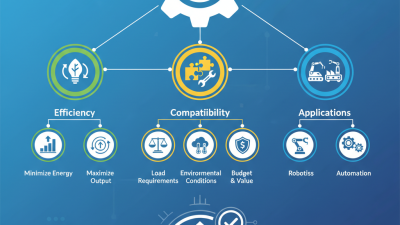
Choosing a torque motor in 2026 starts with the load, not a catalog label. Engineers should measure continuous torque, peak torque, speed, duty cycle, and stopping frequency. Peak torque matters. A motor that survives ten seconds may overheat during repeated cycles. Record shaft inertia, gearbox effects, ambient temperature, and available voltage before comparing motor types. These details show whether the application needs a direct-drive, frameless, housed, or geared solution.

Thermal performance often decides reliability more than advertised torque. Check winding temperature, cooling method, insulation class, and allowable temperature rise. Use real operating data. A machine inside a warm cabinet needs more margin than a laboratory test suggests. Control compatibility matters. Confirm feedback resolution, commutation method, drive current, and cable requirements with the control engineer. Poor tuning can create vibration, noise, and position errors, even when the motor is correctly sized.

Mechanical fit deserves careful review. Check flange dimensions, shaft stiffness, bearing loads, sealing, and axial alignment. Torque ripple may affect camera stages, printing systems, and robotic joints, so test the actual payload when precision matters. A quiet datasheet cannot predict every resonance. I have seen teams select generous peak torque and overlook continuous heating. That choice looked safe, but it reduced service life. Ask qualified suppliers for test curves, tolerances, thermal data, and documented operating limits. Independent verification is valuable, especially when downtime costs more than the motor.