Leave Your Message

How to Understand Dc Motor Working Principles and Applications?

Understanding DC motor working principles is essential for many applications. These motors power various devices, from toys to industrial machines. They convert electrical energy into mechanical energy efficiently.

DC motors operate using electromagnetic principles. When current flows through a coil, it creates a magnetic field. This interaction between the magnetic field and the stator produces motion. Various types of DC motors exist, each designed for specific conditions. Understanding these differences is crucial.

Applications range from automotive to robotics. In everyday life, we often take these motors for granted. However, mastering DC motor working can lead to innovative solutions. Engineers must reflect on their limitations, such as speed control and efficiency. There is always more to learn.
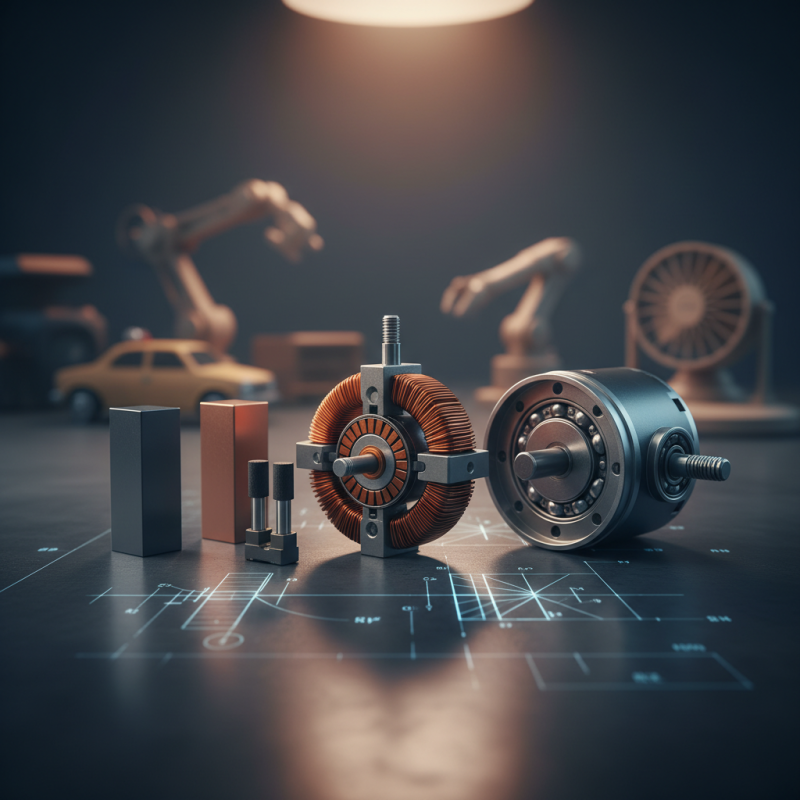
How to Understand Dc Motor Working Principles and Applications?

Understanding DC Motor Basics and Components

How to Understand Dc Motor Working Principles and Applications?

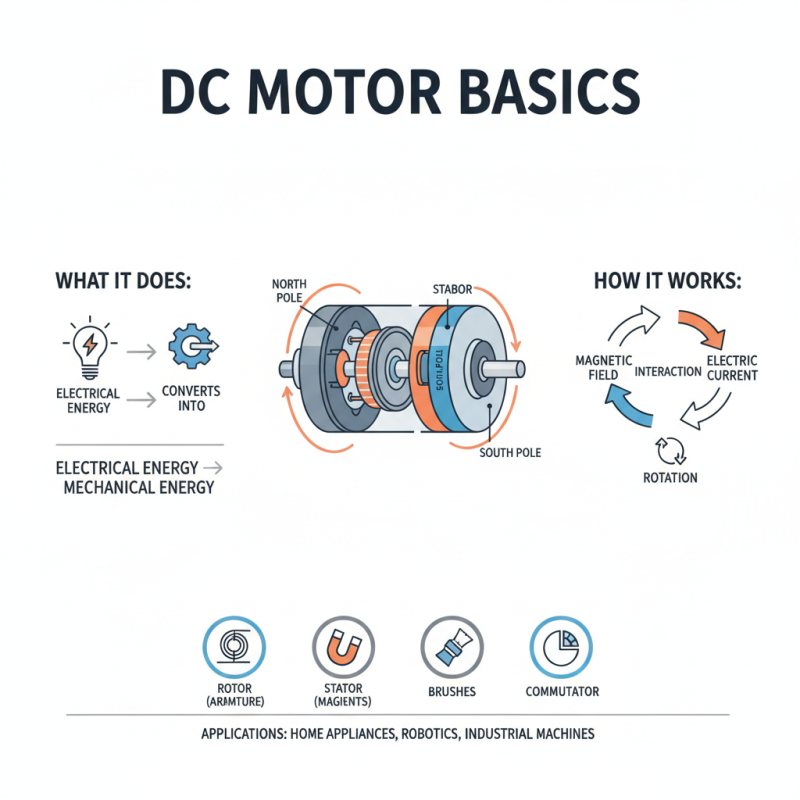
DC motors are commonly used in various applications, from household appliances to industrial machines. Understanding the basics of these motors is crucial. A DC motor converts electrical energy into mechanical energy. This process is made possible by the interaction between a magnetic field and electric current.

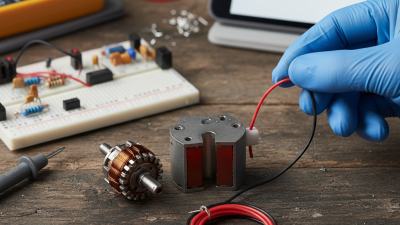
The core components of a DC motor include the armature, commutator, brushes, and stator. The armature is the rotating part. It carries the windings that create a magnetic field when electricity flows through. The commutator ensures the current direction switches, allowing continuous rotation. Brushes maintain contact with the commutator, transmitting current efficiently. The stator provides a steady magnetic field, essential for motor operation.

Despite the simplicity, DC motors have limitations. They can overheat if overloaded. Brush wear can cause maintenance issues. Moreover, the efficiency of these motors can decrease over time. It’s essential to evaluate the application needs and choose the right motor accordingly. Understanding these basic components leads to better performance and longevity of your DC motor.

Principles of Electromagnetism in DC Motors

DC motors operate on fundamental principles of electromagnetism. When current flows through a coil placed in a magnetic field, it produces a torque. The core component is the rotor, which spins when energized. According to a report by the International Electrotechnical Commission, DC motors are used in various applications, accounting for about 25% of the global motor market.

Electromagnetic principles govern how forces act on the rotor. For instance, the phenomenon of Lorentz force is crucial here. This force results from the interaction between magnetic fields and electric currents. It’s fascinating, yet often leads to design challenges. Overheating can result from high currents, affecting efficiency. Researchers highlight that optimal efficiency can sometimes be difficult to achieve in practical applications.

Moreover, these motors are integral in robotics and electric vehicles. Reports suggest that around 75% of electric vehicles employ DC motors in some form. However, the efficiency curve can vary based on the load and speed. In some cases, motor performance might not meet user expectations. Continuous refinement of design is essential for better outcomes in future applications.

Types of DC Motors and Their Specific Applications

How to Understand Dc Motor Working Principles and Applications?

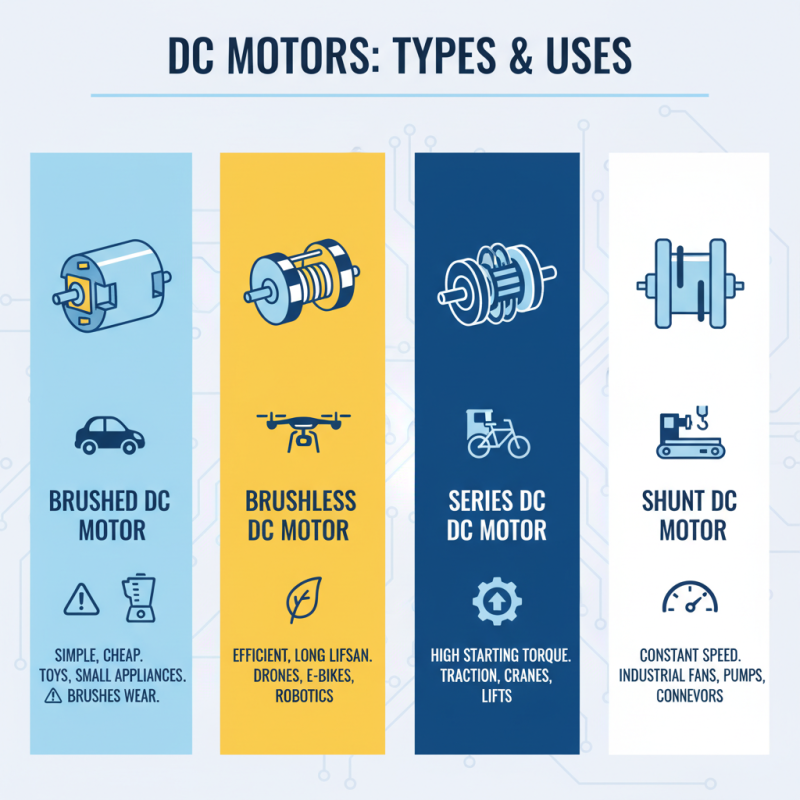
DC motors are divided into several types, each serving distinct purposes. The main types include brushed, brushless, series, and shunt motors. Brushed DC motors are simple and inexpensive. They are used in toys and small appliances. Despite their efficiency, brushes can wear out quickly, leading to maintenance issues.

Brushless DC motors are gaining popularity. They feature no brushes, which reduces friction and increases lifespan. These motors are found in electric vehicles and computer cooling fans. However, they require more complex electronic controls. Series motors provide high starting torque. They are common in cranes and elevators, where initial power is essential. Yet, they can be less efficient at steady speeds.

Shunt motors, on the other hand, are designed for consistent speeds. They are used in lathes and milling machines. These motors provide good control but offer less torque compared to series motors. Each motor type has advantages and drawbacks. Choosing the right motor depends on specific application needs, highlighting the importance of understanding each type's characteristics.

How to Control DC Motor Speed and Direction

Controlling the speed and direction of a DC motor is essential in various applications. The most common method involves using pulse width modulation (PWM). PWM allows the effective voltage to change, which directly influences the speed. By adjusting the duty cycle, you can either speed up or slow down the motor. A wider pulse provides more power, while a narrower one reduces it.

To change the direction of a DC motor, you can reverse the polarity of the power supply. This can be done using an H-bridge circuit. The H-bridge consists of four switches, controlling the current flow. When you switch the connections, the motor rotates in the opposite direction. However, this requires careful handling to avoid short circuits.

There might be challenges in achieving precise control. For example, if the PWM frequency is too high, the motor may not respond as expected. Similarly, switching the polarity too quickly can damage the components. These factors highlight the importance of testing and refining your control strategy for optimal performance. Observing how the motor reacts can lead to better adjustments and improved efficiency.

Common Troubleshooting and Maintenance Tips for DC Motors

DC motors are widely used in various applications, but they can run into issues. It's essential to understand common problems to avoid lengthy downtimes. One common issue is overheating. This can occur when a motor runs for too long without proper cooling. Inspecting the cooling vents regularly can help prevent this.

Another frequent problem is a lack of power. This might be due to damaged wiring or insufficient voltage. Regularly checking connections and ensuring the power supply meets requirements can mitigate this. Sometimes, brushes wear out. Replacing worn brushes can restore motor efficiency.

Additionally, unusual noises may indicate deeper problems. A grinding sound could suggest misalignment or damaged components. It's wise to conduct periodic inspections to catch these issues early. Addressing them can save time and money. Being proactive with maintenance is crucial. Keeping a log of repairs can help track issues over time. Always approach repairs carefully and thoughtfully.