What is an Electric Motor and How Does a DC Motor Work?
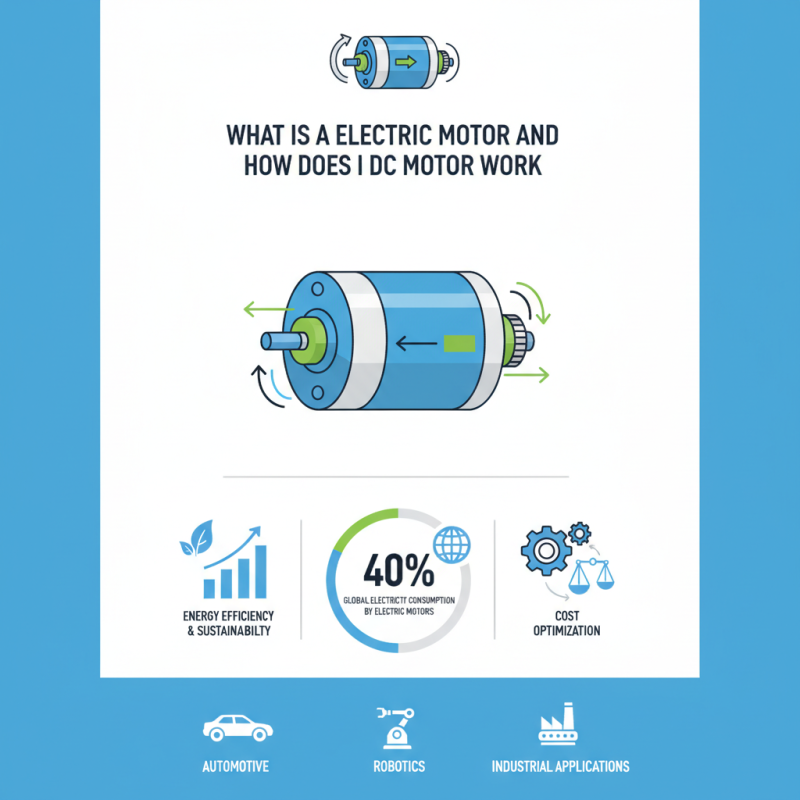
Electric motors play a crucial role in various industries, particularly DC motors, which are widely used for their efficiency and simplicity. According to a report by the International Energy Agency, electric motors account for nearly 40% of global electricity consumption. This significant percentage highlights their importance in reducing energy waste and promoting sustainability.
Expert Robert Jensen, a prominent figure in the Electric Motor DC Motor industry, states, "DC motors are not only efficient but also versatile, adapting to various applications." This adaptability makes DC motors desirable in sectors ranging from automotive to robotics. However, challenges remain. The design and material costs can lead to inefficiencies if not optimized properly.
As the demand for electric motors grows, industry players must focus on innovation. They should address these inefficiencies while maintaining performance. The balance between cost and efficiency will define the future of the Electric Motor DC Motor market. Continuous improvement is essential to enhance its contribution to energy efficiency and environmental sustainability.
What is an Electric Motor?
Electric motors are crucial components in various industries. They convert electrical energy into mechanical energy, enabling countless applications. An electric motor operates based on electromagnetic principles. When current flows through a wire, it generates a magnetic field. This field interacts with magnets within the motor, producing motion. According to industry data, the global electric motor market is expected to reach $200 billion by 2026, showing rapid growth in demand.
When discussing direct current (DC) motors, it's essential to note their simplicity. A DC motor has two main parts: the rotor (or armature) and the stator. The rotor spins when electricity flows, thanks to a commutator that switches the direction of current. This mechanism allows for precise control of speed and torque. Reports indicate that DC motors account for over 30% of all electric motors used in machinery.
Tips: Regular maintenance is vital. Check for wear on brushes and commutators. Keeping these parts in good condition enhances motor efficiency. Conduct periodic inspections to prevent unexpected failures. Understand that efficiency can vary. Sometimes, it may not meet the ideal. This variation is a reflection of real-world conditions and operational limits.
Types of Electric Motors and Their Applications
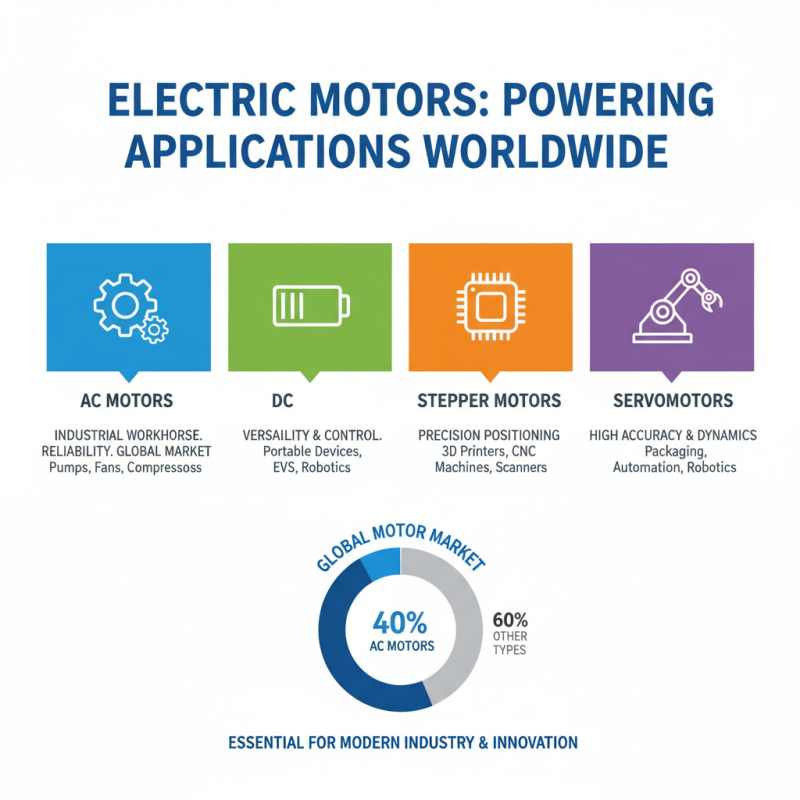
Electric motors are crucial in many applications. Common types include AC motors, DC motors, stepper motors, and servomotors. Each type serves specific needs across various industries. For instance, AC motors dominate in industrial settings for their reliability. They account for about 40% of the global motor market.
DC motors are popular in consumer electronics. Their design allows for speed control and high torque at low speeds. Reports indicate that the demand for DC motors is expected to grow by over 8% annually through 2025. This increase is driven by advancements in robotics and automation. Furthermore, stepper motors play a vital role in 3D printing, where precision is key.
However, choosing the right motor isn’t always straightforward. Factors like energy efficiency and maintenance must be considered. Sometimes, users overlook the importance of energy consumption. Studies show that inefficient motor systems can waste up to 30% of energy. Additionally, the initial cost often overshadows long-term savings. Understanding these aspects is crucial for informed decision-making in motor selection.
Introduction to DC Motors
DC motors are essential components in many applications. They convert direct current electricity into mechanical energy. This process enables various devices to function, from small toys to larger machinery. The simplicity of their design contributes to their widespread use.
A DC motor contains a rotor and a stator. The rotor spins when electric current passes through its windings. This creates a magnetic field that interacts with the field produced by the stator. The interaction causes the rotor to turn. However, maintaining effective operation can be challenging. Over time, brushes and commutators can wear out, requiring maintenance.
Efficient performance relies on proper voltage supply and electrical connections. Insufficient power can lead to reduced effectiveness. Watching for signs of wear is crucial. Observing the motor's behavior during use can help prevent failure. Despite their advantages, DC motors are not always the best choice for every project. Understanding their limitations is necessary for effective application.
DC Motor Efficiency vs. Load
This bar chart illustrates the efficiency of a DC motor at different load conditions. As the load increases, the efficiency of the motor rises and stabilizes, indicating optimal performance within certain limits.
How DC Motors Operate: Key Principles Explained
DC motors are fundamental devices in many industries. They convert electrical energy into mechanical energy. This conversion process is easy to understand. A basic DC motor consists of a rotor, stator, and commutator. When voltage is applied, the current flows through the rotor, creating a magnetic field. This interaction produces torque, causing the rotor to spin.
One key principle is Ohm's Law, which states that voltage equals current times resistance. According to a 2022 industry report from the International Electrotechnical Commission, around 37% of electric motors in use today are DC motors. They excel in applications requiring precise speed control. For example, in robotics, a small error in motor performance can lead to significant operational issues.
Another aspect to consider is efficiency. While DC motors are reliable, they can be less efficient than alternative motor types in some scenarios. Many designs exhibit losses due to friction and heat. Recent studies suggest that improving material quality can enhance performance, leading to greater energy savings. The pursuit of efficiency remains a challenge in motor design.
What is an Electric Motor and How Does a DC Motor Work?
| Feature |
Description |
Key Principle |
| Type of Motor |
DC Motor |
Uses Direct Current |
| Components |
Stator, Rotor, Commutator |
Magnetic Fields Interaction |
| Working Principle |
Electromagnetism |
Lorentz Force |
| Applications |
Small Appliances, Toys, Electric Vehicles |
Variable Speed Control |
| Advantages |
Simple Design, Cost-Effective |
Ease of Control |
| Disadvantages |
Limited Speed, Maintenance Required |
Brush Wear |
Common Uses and Advantages of DC Motors
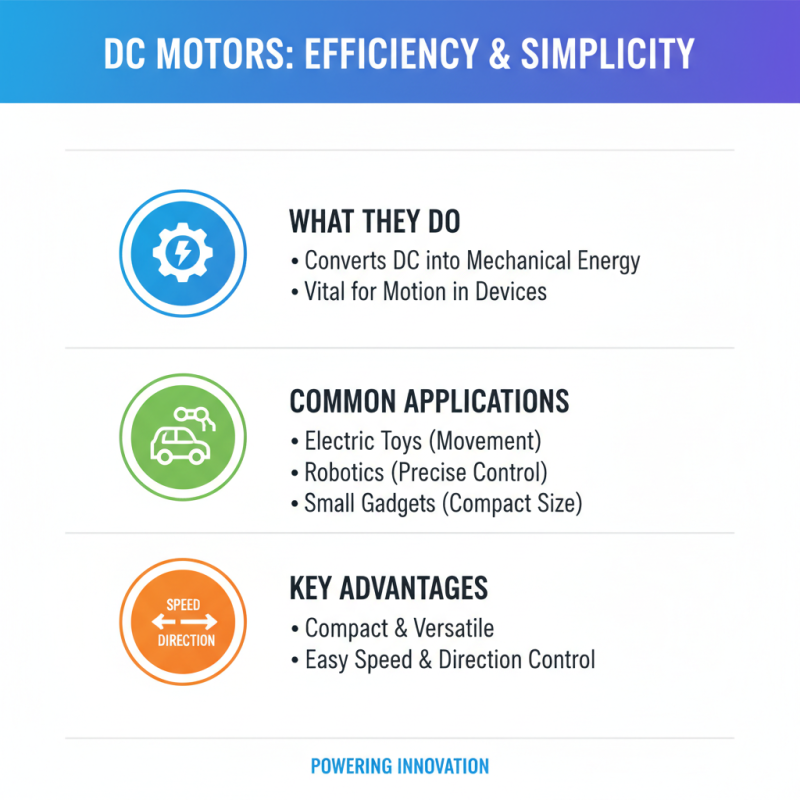
DC motors are widely used for various applications due to their efficiency and simplicity. They convert direct current into mechanical energy. This process makes them vital in many devices. For example, electric toys rely on these motors for movement. Their compact size allows them to fit in small gadgets. Robotics also benefits greatly from DC motors. They can easily control speed and direction, giving precise movements.
These motors stand out for their advantages. They are cost-effective, making them suitable for budget-friendly projects. Maintenance is often low since they have fewer parts. Moreover, they offer smooth operation, which is crucial for applications like electric fans or conveyors. However, they can generate heat when overloaded. Users must monitor their performance over time. This aspect may affect durability. Overall, DC motors are powerful and versatile tools in modern technology.