Dc Motor Working Tips for Beginners How Does It Work?
DC motors play a crucial role in modern technology. The global DC motor market is projected to reach $30 billion by 2026, according to industry reports. Understanding DC motor working principles is essential for beginners. These motors convert electrical energy into mechanical energy efficiently.
DC motors have a simple design, which makes them popular. They consist of a rotor, stator, and commutator. These components work together to create motion. However, issues can arise if not properly understood. For instance, improper wiring can lead to overheating. Beginners must grasp these basic concepts to avoid costly mistakes.
Learning about DC motor working will not only boost your skills but also open new opportunities. Gaining hands-on experience is vital. Engaging with projects can highlight common challenges. Embrace these experiences to refine your understanding further. The journey to mastering DC motors is ongoing and rewarding.
Understanding the Basic Principles of DC Motors and Their Operation
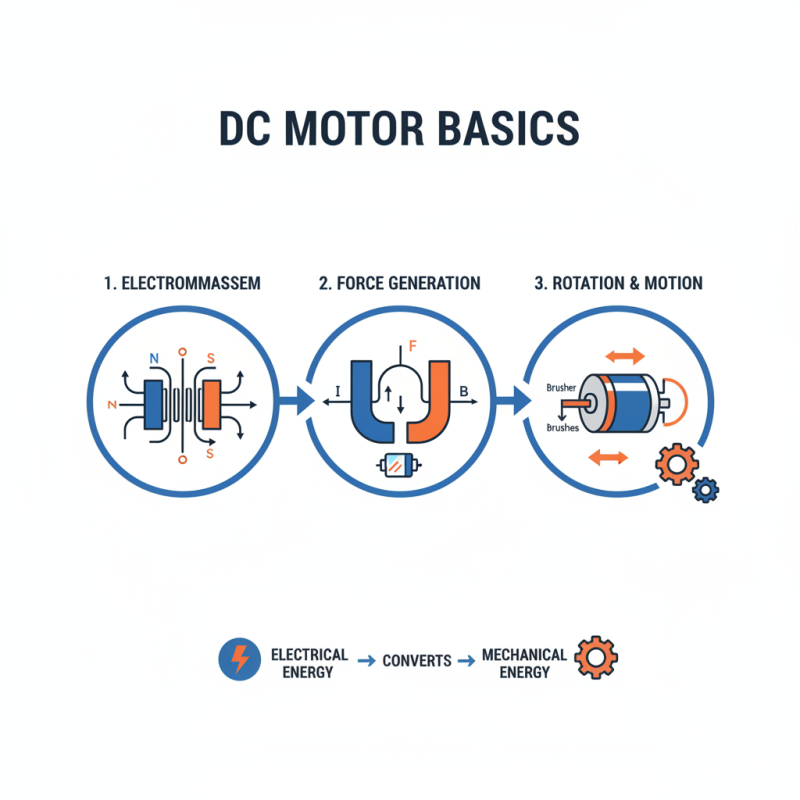
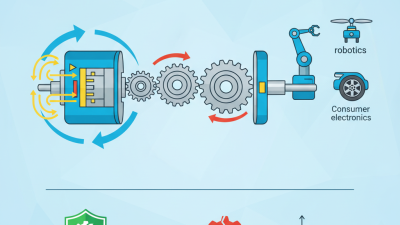
DC motors are fascinating devices that convert electrical energy into mechanical energy. They operate based on the principle of electromagnetism. When electric current flows through a coil in a magnetic field, a force is generated. This force causes the rotor to spin, producing motion. Understanding this principle is vital for anyone working with DC motors.
Here are some helpful tips for beginners. First, ensure a proper power supply. Inconsistent voltage can lead to performance issues. Second, pay attention to the motor's load. Overloading can cause heating and damage. Keep the load within the specified limits for longevity. Lastly, don’t ignore maintenance. Regularly check for wear and tear. Clean the commutator to ensure efficiency.
While DC motors seem straightforward, they can be tricky. Misunderstanding the wiring can lead to reverse rotation. Not all motors behave the same. Some may stall under heavy loads. Experimentation is key in understanding their behavior better. Take notes as you work, and reflect on your experiences. This practice can enhance your learning process significantly.
Key Components of a DC Motor and Their Functions Explained
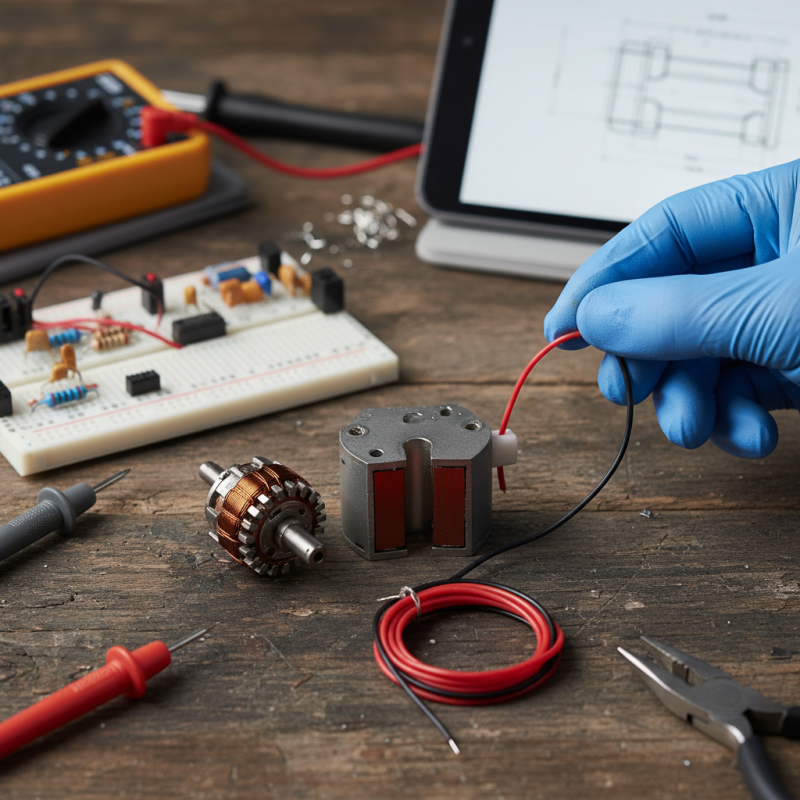
DC motors are integral in various applications, from small toys to industrial machines. Understanding their key components helps in maximizing efficiency and performance. The main elements include the rotor, stator, commutator, and brushes, each playing a vital role in motor operation.
The rotor is the rotating part of the motor. It converts electrical energy into mechanical energy. The stator, fixed on the outer section, provides a steady magnetic field. This magnetic field interacts with the rotor to create motion. According to industry reports, DC motors typically achieve about 80-90% efficiency under optimal conditions. However, various factors such as load and supply voltage can affect this efficiency.
The commutator and brushes work together to maintain electrical contact with the rotor. They manage the current direction. A flaw in this area could lead to inconsistent performance. Industry studies have shown that wear on brushes can reduce motor lifespan significantly. Regular maintenance is key to preventing such issues. In beginner projects, understanding these components can aid in troubleshooting.
Common Types of DC Motors Used in Various Applications
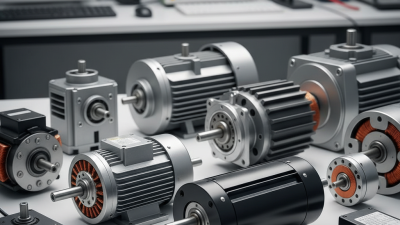
DC motors are widely used in various applications, each serving a specific purpose. The two common types include brushed and brushless DC motors.
Brushed motors are simple and inexpensive. They have carbon brushes that make contact with the rotor. This design can lead to wear over time. However, they provide high torque at low speeds.
On the other hand, brushless motors don’t use brushes, resulting in less friction and increased efficiency. They rely on electronic controllers, which can complicate the setup for beginners. These motors are popular in drones and electric vehicles. Many people find them confusing at first. Yet, they offer long life and better performance in some applications.
Next, you might encounter stepper motors. They divide a full rotation into smaller steps. This allows precise control of position and speed. Stepper motors are widely used in 3D printers and CNC machines. Beginners often struggle with understanding their control methods. It takes practice to grasp their operation fully. Each type of DC motor has its pros and cons, and exploring these differences is crucial for application success.
Practical Tips for Troubleshooting DC Motor Issues
When working with DC motors, troubleshooting is a common challenge, especially for beginners. One common issue is overheating. Reports indicate that nearly 30% of motor failures stem from overheating. This can usually be traced back to overload conditions or poor ventilation. Regularly check the motor temperature. If it’s too hot to touch, shut it down immediately.
Another frequent problem is irregular performance. This can manifest as inconsistent speed or unexpected stoppages. Inspect the power supply first. A poor connection can reduce voltage, affecting motor performance. A study shows that around 15% of all motor operational issues result from electrical supply problems. Ensure that connectors are tight.
Moreover, listen for unusual sounds like grinding or squeaking. These sounds can signal mechanical issues, such as worn bearings. It’s essential to perform routine inspections. Lack of maintenance can lead to failures that might require costly repairs. Noting unusual behaviors in your motor can often lead to early detection of problems.
DC Motor Working Tips for Beginners
| Aspect |
Details |
| Basic Principle |
DC motors operate by converting electrical energy into mechanical energy using electromagnetic fields. |
| Components |
Key components include the armature, stator, commutator, and brushes. |
| Common Issues |
Stalling, overheating, and noise can indicate problems with the motor. |
| Troubleshooting Tips |
Check connections, inspect brushes for wear, and ensure proper power supply. |
| Maintenance |
Regular cleaning and lubrication can prolong motor life and improve performance. |
Calculating Speed and Torque: Essential Metrics for DC Motors
When working with DC motors, understanding speed and torque is crucial. Speed refers to how fast the motor spins. Torque indicates the motor's rotational force. These two metrics can affect performance in various applications. Improper calculations may lead to inefficiency or failure.
To calculate speed, you need the number of revolutions per minute (RPM). It can be influenced by voltage and load conditions. Higher voltage usually increases speed. Torque calculation involves understanding the load on the motor. If the torque demand exceeds capability, the motor may stall. Always consider these factors when selecting a motor for your needs.
Newbies often overlook load conditions. It's easy to underestimate how much torque is needed. This oversight can result in project delays or redesigns. Testing with different loads can reveal surprising results. Each project may require tweaks and adjustments to find the right balance. The learning curve is steep but rewarding.
DC Motor Speed and Torque Metrics
This chart illustrates the essential metrics for a typical DC motor, showcasing the relationship between speed measured in RPM (Revolutions Per Minute) and torque measured in Nm (Newton-meters). Understanding these metrics is crucial for beginners in grasping how DC motors work effectively.