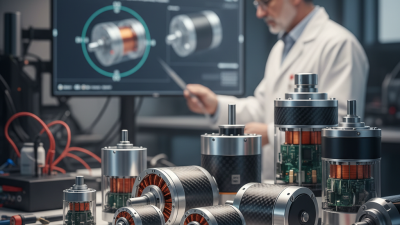
What is a DC Motor Gear Motor and How Does it Work?
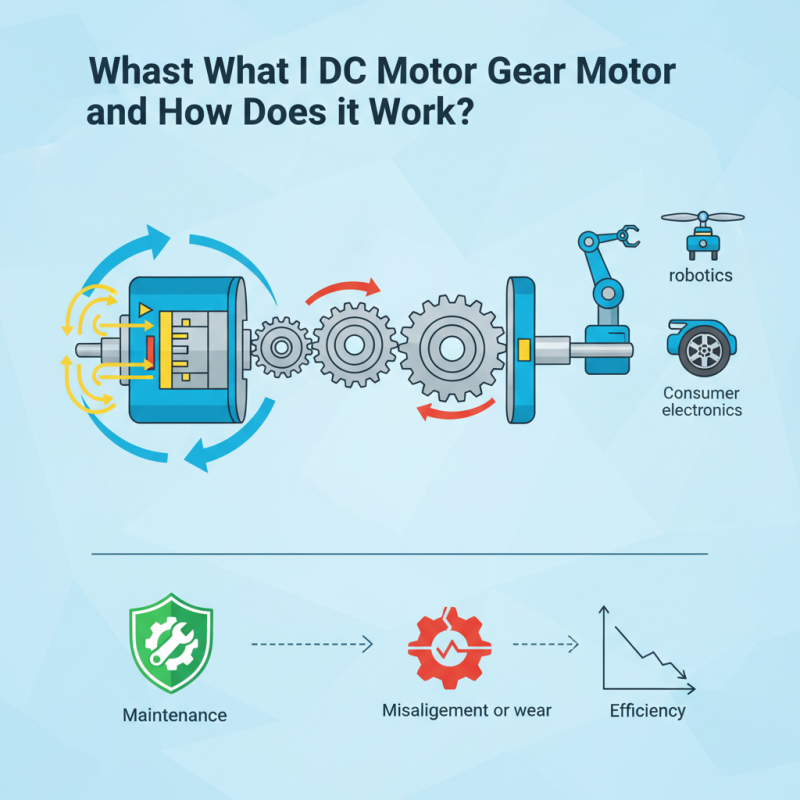
A DC Motor Gear Motor is a powerful tool in many applications. It combines a DC motor with gears. This design allows for greater torque and better control. You can find it in robotics, automotive, and consumer electronics. The functionality of a DC Motor Gear Motor is essential for precise movements.
When it operates, the motor receives electrical energy and converts it into mechanical movement. The gears then increase the torque while reducing speed. This mechanism is not without its challenges. Misalignment or wear can affect performance. It's crucial to maintain these components to ensure efficiency.
Understanding how a DC Motor Gear Motor works helps in multiple fields. Engineers and hobbyists alike benefit from this knowledge. Yet, many still overlook the importance of regular maintenance. Reflecting on these factors can enhance the performance of your projects and devices.
What is a DC Motor Gear Motor?
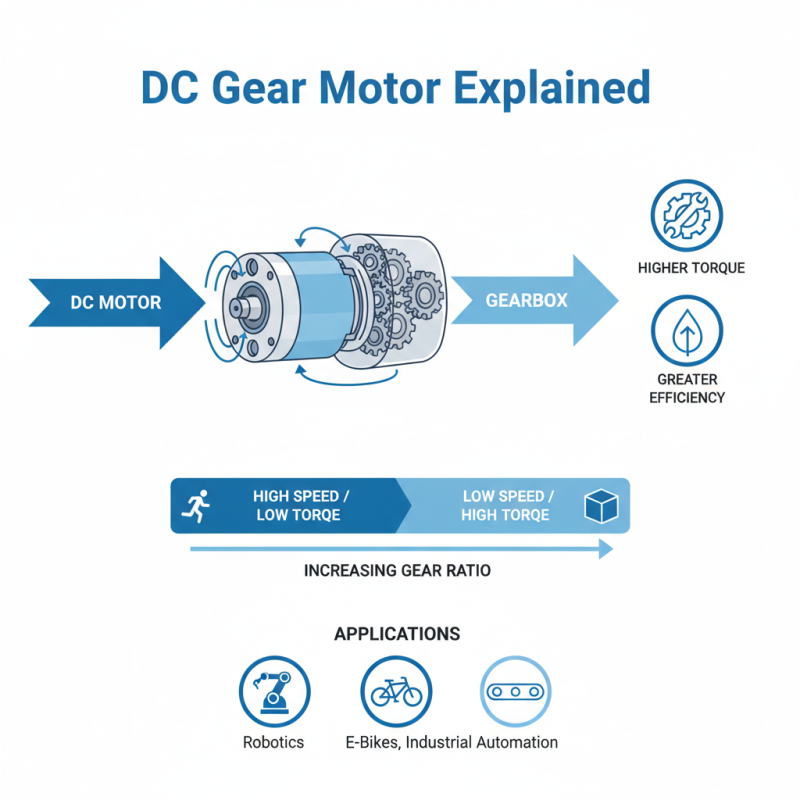
A DC motor gear motor combines the functions of a DC motor and a gearbox. This integration provides higher torque and greater efficiency for various applications. The gear ratio fundamentally influences the output speed and torque. By reducing the speed, it increases torque, making it suitable for moving heavy loads.
According to industry reports, the global DC motor market is expected to grow by 9.5% from 2020 to 2027. Gear motors have gained traction in automation, robotics, and electric vehicles. In these applications, choosing the right gear ratio is crucial. An incorrect ratio can lead to inefficiencies and excessive wear.
These motors are often overlooked in design phases. Their importance can be underestimated. A well-designed gear motor can significantly enhance performance. Yet, engineers must carefully evaluate their specific needs. Sometimes decisions are made without thorough analysis, leading to suboptimal results. The balance between power, speed, and size is delicate.
Components of a DC Motor Gear Motor
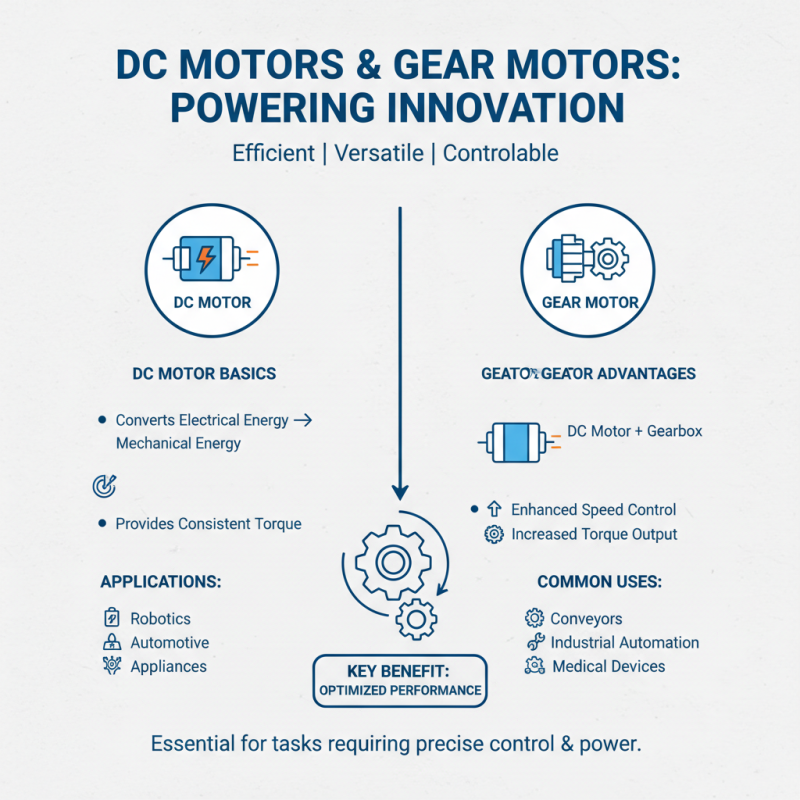
DC motor gear motors are essential in various applications. They convert electrical energy into mechanical energy, making them ideal for tasks requiring consistent torque. A gear motor combines a DC motor with a gearbox. This design allows for enhanced control over speed and torque.
The primary components of a DC motor gear motor include the rotor, stator, and gearbox. The rotor is the rotating part, while the stator remains stationary. The gearbox adjusts the speed and increases torque through a system of gears. For instance, a common gear ratio might be 10:1, providing significant torque boost. Reports indicate that gear motors can improve efficiency by up to 30% in specific applications.
Tips: Regularly inspect the gear motor for wear and tear. Maintenance can extend the motor's lifespan. Ensure proper alignment during installation to avoid excessive friction. Overheating can reduce efficiency, so monitor operating temperatures closely. Select the right gear ratios based on your specific needs, as this impacts performance significantly.
How DC Motor Gear Motors Operate
DC motor gear motors are essential components in various applications. They combine a direct current (DC) motor with a gear system. This combination increases torque and reduces speed. The gearing mechanism allows for precise control of performance. For instance, in robotics, these motors can provide fine movements for robotic arms. Reports indicate that DC motors account for over 40% of motor sales globally.
Operating a DC motor gear motor is relatively simple. When voltage is applied, the electric current creates a magnetic field. This field interacts with windings in the motor. As a result, the rotor turns, generating motion. The integrated gears amplify the torque. This ensures that even a small motor can perform heavy tasks. For instance, gear ratios of 3:1 or 5:1 are common, enabling various applications.
Tips: Always check the motor's specifications before use. Load limits are crucial. Too much load can lead to overheating or failure. Also, consider the environment. Dust and moisture can affect performance. Regular maintenance helps improve longevity. Monitoring these factors can prevent potential issues. Small adjustments can lead to better efficiency.
DC Motor Gear Motor Performance Comparison
This chart displays the efficiency and torque output of different types of DC motor gear motors under varying load conditions. Each bar represents the performance metrics of a specific motor configuration.
Applications of DC Motor Gear Motors
DC Motor Gear Motors are widely utilized in various applications due to their efficiency and versatility. One common application is in robotics. They offer precise control over speed and torque, making them suitable for robotic arms. These motors can easily adjust their output, allowing for intricate movements. However, some users may find it tricky to calibrate them properly.
Another significant application is in electric vehicles. Gear motors provide necessary torque to move heavy loads. They enable better acceleration compared to regular motors. Yet, overheating can be a concern if they're not managed correctly. Users need to monitor their performance closely.
Additionally, DC Motor Gear Motors are seen in household appliances. Items like blenders and dishwashers benefit from their compact design and robust performance. This improves overall energy efficiency. Still, occasional maintenance is required to ensure smooth operation. Neglecting this can affect longevity and performance over time.
What is a DC Motor Gear Motor and How Does it Work? - Applications of DC Motor Gear Motors
| Feature |
Description |
| Type |
DC Gear Motor |
| Power Range |
5W to 500W |
| Voltage Options |
6V, 12V, 24V, 48V |
| Efficiency |
Up to 90% |
| Torque Range |
0.1 Nm to 50 Nm |
| Speed Range |
5 RPM to 300 RPM |
| Common Applications |
Robotics, Conveyor Systems, Electric Vehicles, Home Appliances |
| Control Method |
PWM, H-Bridge |
| Advantages |
High Torque, Compact Size, Versatile Speed Control |
Advantages and Disadvantages of DC Motor Gear Motors
DC motor gear motors are popular in various applications. They offer distinct advantages. One significant benefit is their ability to provide high torque at low speeds. This makes them ideal for robotics and industrial machinery. The gear reduction amplifies the motor's torque, allowing it to handle heavier loads efficiently.
However, there are notable downsides. The complexity of gear systems can lead to increased wear and tear. This may result in maintenance challenges over time. Additionally, these motors can be less efficient at higher speeds. This limits their usefulness in applications requiring fast, precise movements. Noise can also be a concern due to the gears' interaction.
Users must consider these factors carefully. Selecting a motor isn't just about torque or speed. It's about finding the appropriate balance for specific needs. Evaluating the application's demands will lead to better decision-making.