2026 How to Choose a Brushed DC Electric Motor for Your Project?
Choosing the right Brushed DC Electric Motor is crucial for the success of any project. The global market for these motors is projected to reach $12.5 billion by 2026, reflecting their significance in various applications. According to industry expert Dr. Emily Johnson, "Selecting the correct motor can make or break your design." This insight emphasizes the importance of informed decision-making in motor selection.
Brushed DC Electric Motors are widely used in robotics, automotive, and consumer electronics. Their simplicity and cost-effectiveness make them appealing. However, the variety of options available can be overwhelming. It's essential to consider parameters like voltage, torque, and speed. These factors directly impact performance and efficiency.
Potential pitfalls often arise. Many projects fail due to improper motor selection. For example, using a motor with inadequate torque can lead to operational failures. It's vital to evaluate your project's specific needs thoroughly. Understanding how to choose the right Brushed DC Electric Motor can greatly enhance the likelihood of success.

Understanding Brushed DC Electric Motors and Their Applications
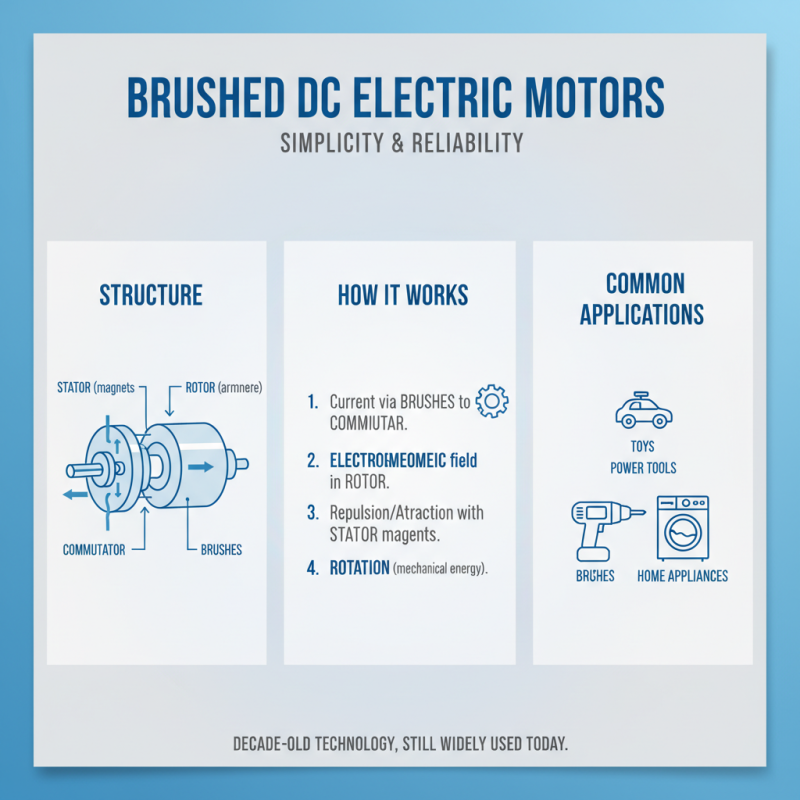
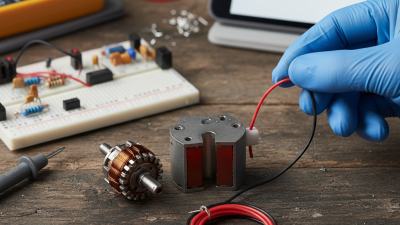
Brushed DC electric motors are popular in many projects. They are known for their simplicity and reliability. Understanding their structure helps in choosing the right motor. These motors utilize brushes to transfer current to the rotor, creating motion. They have been used in toys, tools, and appliances for decades.
Their applications can vary widely, from robotics to automotive systems. For hobbyists, they offer an excellent starting point. When selecting a brushed DC motor, consider voltage, durability, and speed. Look for motors that match your project’s requirements. Testing different motors can lead to better performance.
However, working with brushed motors has downsides. They can produce noise and require maintenance. Additionally, the brushes wear out over time, affecting efficiency. These factors should not be overlooked. Being aware of such issues can guide improvements in your project. Emphasizing these points can ensure better outcomes in future designs.
Key Factors to Consider When Selecting a Brushed DC Motor
When selecting a brushed DC motor for your project, several key factors come into play. Voltage rating is crucial; ensure the motor can handle your project's power supply. Choosing the right voltage can affect efficiency and performance. Consider the motor's speed and torque specifications. These parameters define how well the motor performs under specific loads. A high-speed motor may offer impressive performance but could lack torque. Balance these aspects based on your application needs.
Another vital aspect is the size and weight of the motor. A compact motor can save space but might compromise torque or speed. Make sure to assess the physical dimensions carefully. The environment where the motor will operate matters as well. High temperatures, humidity, or dust can impact the motor's longevity. Consider protective measures if needed. Listening to expert advice and reviewing manufacturer guidelines can provide clarity, but personal research always helps.
Lastly, think about your project's specific requirements. Sometimes, a motor may not perfectly fit the technical criteria, leading to reflections on adjustments needed. Every project is unique, and flexibility is essential. Remember, finding the right motor takes time and experimentation. Embrace the learning process, and be open to adjustments as you refine your choice.
Comparing Different Types of Brushed DC Motors: Pros and Cons
When selecting a brushed DC motor, it's essential to understand the different types available. There are permanent magnet and series-wound motors, each with unique features.
Permanent magnet motors offer simplicity and efficiency. They are compact and produce high torque at low speeds, making them suitable for small applications.
However, they can suffer from overheating in extended use, requiring careful thermal management.
On the other hand, series-wound motors provide excellent speed control. Their design allows for high starting torque, perfect for heavy-load applications. However, these motors can be less efficient when running at constant speeds.
The wear on brushes also tends to be higher due to the nature of operation, potentially leading to more frequent maintenance needs. This trade-off between torque and efficiency should be a key consideration.
Ultimately, the choice depends on your project's specific requirements. Engineers often face challenges matching motor characteristics to application needs. Regular assessment and testing can help refine these selections.
Understanding these pros and cons aids in informed decision-making and prevents costly mistakes in the long run.
Calculating Power and Torque Requirements for Your Project
Choosing the right brushed DC electric motor begins with understanding your project's power and torque needs. Power, measured in watts, is critical. For example, a small robotic arm may require 50-100 watts, while larger applications might range from 200 to 1000 watts. According to industry standards, a good rule of thumb is to calculate power requirements based on load and speed.
Torque measurement is also essential. Torque, expressed in Newton-meters, determines the motor's ability to perform work. A typical robot needs around 0.5 to 1.5 Nm, depending on its size and weight. However, precise calculations can be tricky. Sometimes, assumptions lead to underestimations, risking motor inefficiency. It’s essential to factor in the load type. For continuous load applications, a higher torque rating might be necessary.
One should consider peak versus continuous torque ratings. Peak torque is often higher than continuous torque. Some motors can handle short bursts of high torque. Understanding this difference is crucial for project design. Miscalculating can lead to performance issues and even motor failure. Engineers should analyze all specifications and anticipate troubleshooting requirements.
Wiring and Control Options for Brushed DC Electric Motors
When selecting wiring and control options for brushed DC electric motors, understanding the basics can greatly improve your project's performance. Brushed DC motors offer simplicity in both wiring and control. Typical configurations include basic on-off switches, variable resistors, and pulse width modulation (PWM) for speed control. According to industry reports, PWM can increase efficiency by up to 20% compared to linear control methods. This makes it a suitable choice for applications demanding precise speed regulation.
In terms of wiring, enthusiasts often simplify the process by using color-coded wires. Typically, red signifies positive, while black indicates negative. However, it's vital to check manufacturer specifications, as not all motors follow this color scheme. Proper insulation and securing of connections are crucial to prevent short-circuits. The National Electrical Manufacturers Association emphasizes that over 30% of motor failures are related to wiring issues. This statistic highlights the need for careful planning in installation.
Control options also play an essential role in determining motor responsiveness. Advanced systems allow for feedback mechanisms that adjust speed based on load. However, integrating these systems may present challenges. For instance, programming can be complex, and improper settings can lead to motor stalling. Therefore, a thorough understanding of both the control software and the motor characteristics is essential for optimal performance.
Brushed DC Electric Motor Performance Comparison
This chart compares the performance of different brushed DC electric motors based on torque and efficiency ratings measured across various voltage levels.