Best 12v Dc Gear Motor for High Performance Applications?
In today's competitive market, the demand for high-performance applications is rising. One key component driving this trend is the 12v DC gear motor. These motors are known for their efficiency and robust performance, making them essential in robotics, automotive systems, and industrial automation.
According to a report by MarketsandMarkets, the DC motor market is projected to reach $24 billion by 2025. This growth highlights the increasing reliance on efficient systems. The 12v DC gear motor stands out due to its compact design and high torque output. However, it is crucial to select the right gear motor for specific applications to avoid performance issues. Not all motors deliver the expected results under diverse operational conditions.
Users must consider factors like load capacity, speed, and durability when choosing a 12v DC gear motor. While many options are available, not every motor is built to last. Research reveals that subpar models can lead to operational failures. Thus, thorough evaluation and expert guidance are essential in making informed decisions.

Choosing the Right 12V DC Gear Motor for High-Performance Needs
When selecting a 12V DC gear motor for high-performance applications, understanding your specific needs is crucial. The gear motor’s torque, speed, and durability are key factors. Depending on your application, make sure to assess these features closely. For example, a motor with higher torque is essential for heavy load applications. Meanwhile, speed is vital for tasks requiring quick action.
Consider the type of load the motor will handle. Continuous loads often require different specifications compared to intermittent loads. A common challenge is selecting a motor that can deliver consistent performance under varying conditions. Besides, it’s important to think about the motor's lifespan. Many users overlook this aspect, yet motors do wear out over time.
In high-performance scenarios, efficiency matters greatly. A motor that operates efficiently will save energy and prolong battery life. However, achieving the right balance between efficiency and performance can be tricky. You may find yourself experimenting with various models and configurations to discover the best fit. Documenting this trial-and-error process is beneficial for future references.
Understanding the Key Specifications of 12V DC Gear Motors
When evaluating 12V DC gear motors, understanding key specifications is essential. Torque rating is a critical metric. High-performance applications often require motors that can deliver at least 15-20 Nm of torque. For instance, in robotics, a gear motor with sufficient torque ensures smooth operation in demanding tasks.
Speed is another pivotal factor. Most high-performance gear motors operate in a range of 100 to 300 RPM. This range can significantly impact how quickly a device or machine performs its task. Precise speed control can enhance efficiency and functionality, especially in automated systems.
Efficiency ratings are often overlooked. A well-designed gear motor can reach efficiency levels of up to 90%. This data is important in reducing heat generation and maximizing battery life. Neglecting this aspect can lead to unnecessary energy waste. Users should pay close attention to these parameters to avoid suboptimal performance and unexpected costs.
Best 12V DC Gear Motor for High Performance Applications
| Model |
Voltage (V) |
Current (A) |
Speed (RPM) |
Torque (Nm) |
Gear Ratio |
| Model A |
12 |
2.5 |
100 |
0.5 |
1:30 |
| Model B |
12 |
1.8 |
200 |
0.3 |
1:50 |
| Model C |
12 |
3.0 |
75 |
0.8 |
1:20 |
| Model D |
12 |
2.0 |
150 |
0.4 |
1:15 |
| Model E |
12 |
2.2 |
120 |
0.6 |
1:25 |
Assessing Torque and Speed Requirements in High-Performance Applications
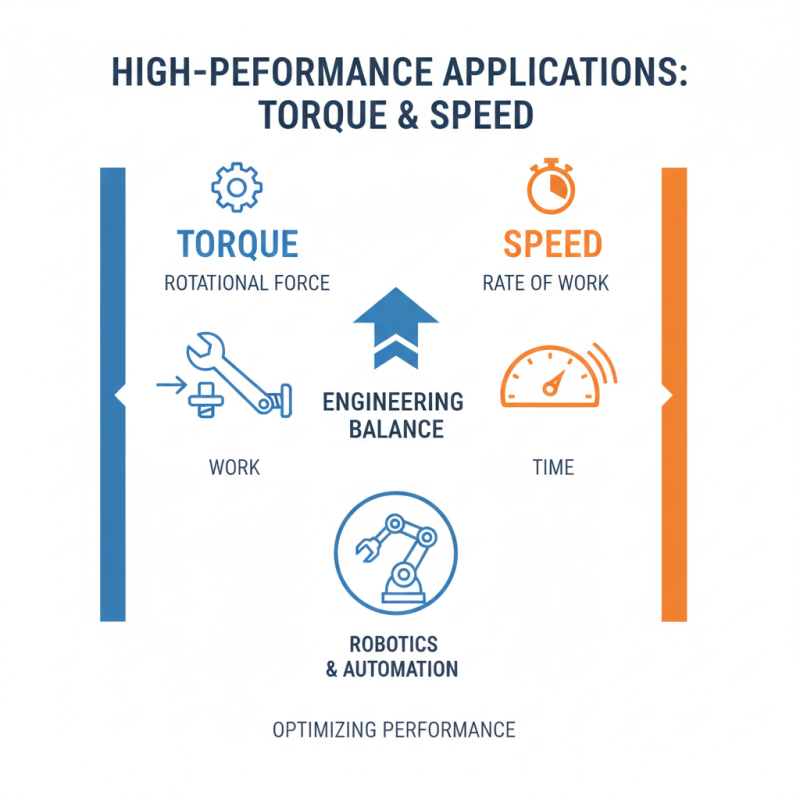
In high-performance applications, torque and speed requirements are critical. Engineers often define these parameters based on the specific demands of the task. Torque is the rotational force needed to perform work, while speed relates to how quickly that work is done. For instance, in robotics or automation, a motor must balance these two factors effectively.
A recent report from the International Journal of Engineering Research highlighted that motor torque needs can vary significantly. For heavy-load applications, a torque range from 0.5 Nm to over 10 Nm is often necessary. Conversely, lower torque levels are sufficient for lightweight installations. Speed requirements can also differ, typically ranging from 100 to 300 RPM for many applications. However, some setups may demand speeds exceeding 600 RPM.
It’s not always easy to find the right gear motor. Mismatched torque and speed can lead to inefficiencies and even equipment failure. Passionate engineers often reflect on their choices in these scenarios. They recognize the delicate balance between power and control in motor selection. Carefully assessing these requirements can yield better performance and reliability in high-stress environments.
Comparative Analysis of Top Brands and Models in the Market
In the realm of high-performance applications, choosing the right 12V DC gear motor can significantly impact efficiency and effectiveness. Recent industry reports indicate that performance consistency is a vital factor. For instance, a study from the International Journal of Electrical Engineering revealed that motors with higher torque ratings generally provide better results in demanding scenarios. Torque ratings above 1 Nm are often preferred for applications requiring robust performance, such as robotics and automation systems.
Energy efficiency is another critical consideration. According to a market analysis by the Electric Motor Association, high-performance DC gear motors can achieve efficiencies upwards of 85%. Models that utilize advanced brushless technology tend to surpass this percentage, offering better energy savings over time. However, not all motors meet these standards, and some options might perform well initially but decline rapidly in efficiency. Regular assessments of motor performance can mitigate potential issues related to wear and loss of mechanical advantage.
Failure rates also differ significantly between models. Data suggests that poorly designed gearboxes may encounter issues after only a few hundred hours of operation. In contrast, high-quality motors can last thousands of hours with minimal maintenance. Being aware of these discrepancies can help users make informed choices. Investing time in comparative analyses will yield better long-term results.
Impact of Gear Reduction Ratios on Motor Performance and Efficiency
When selecting a 12V DC gear motor, understanding gear reduction ratios is crucial for optimizing performance. Gear reduction allows for increased torque while decreasing speed, which is essential for high-performance applications. For instance, a motor with a 10:1 gear ratio can deliver significantly higher torque than its un-geared counterpart, making it suitable for heavy loads. Research indicates that motors with optimized gear ratios can achieve efficiency levels up to 90% under certain conditions.
This impact is evident in applications requiring precise control, like robotics and automotive mechanisms. Gear motors often operate best at specific load levels. Ratios too high may lead to motor stalling, wasting energy and reducing overall effectiveness. Conversely, a lower gear ratio can facilitate faster speed with less torque, ideal for lighter tasks. Striking this balance is key to successful application performance, yet it is often overlooked.
While higher gear ratios seem advantageous, they can introduce complexities. Efficiency can decline if the motor struggles to maintain power without overheating. Engineers recommend careful testing to determine the most effective ratio for each application. Balancing torque, speed, and energy consumption is vital to achieve desired outcomes. Ultimately, understanding gear reduction ratios and their effects on performance is fundamental for maximizing the potential of 12V DC gear motors.